Posted in category "Bishops"
“Remember? The library of the bishop’s house? I hesitated at first in saying that I trully (sic) love you. What I have been feeling for you is something totally new and different from all the other feelings of love I have experienced. Now, I have no hesitations in saying that I love you (in private and in public) and I will always love you more than yesterday. I am afraid,” he continued, “that all that you know about me may compromise your freedom to love or to leave…At this point I cannot imagine my life without you. But I can’t bear the thought of you being entrapped either,” he concluded. “So my beloved Matthew, I hope and pray that you are ‘my other ½ that walks life’s journey with me.” The writer was worried that Matthew would feel “entrapped” by him because he held an important post in the diocese and because he had revealed painful stories about being hurt by other men.

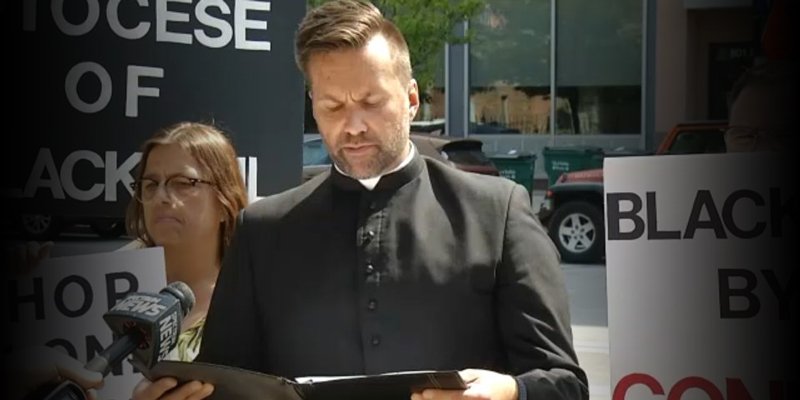
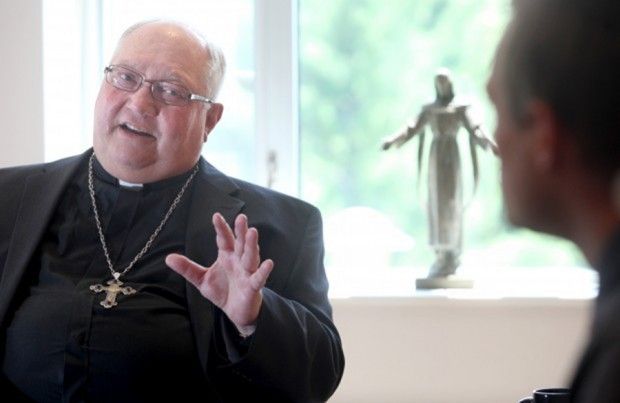
In a staff meeting recorded by Rev. Biernat, Bishop Malone griped, “It sounds like a soap opera. It sounds like a love triangle. And you know what the media can do with that. With all else that’s going on in the diocese and all the…attacks on my credibility…and that I’ve known that something’s going on here that shouldn’t be and I let it go…I mean this is a disaster.” 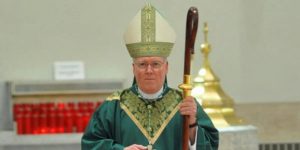
Bishop Malone went on to explain Bojanowski’s relationship with the Rev. Jeffrey Nowak. The two had been friends and that Nowak mentored Bojanowski as he discerned a vocation to priesthood. After Bojanowski met Biernat, he began spending time with him. “Matthew’s relationship with Nowak cooled you might say, and this was disturbing to Nowak,” Bishop Malone explained. “Fr. Nowak secretly photographed the letter he found in Matthew’s apartment in Boston, when he was there.” 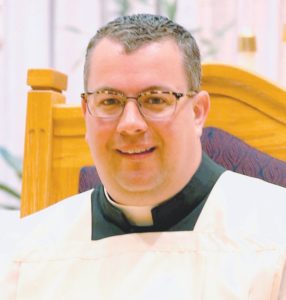
In a complaint filed with Bishop Malone’s office in November 2018, Bojanowski said Rev. Nowak began sexually pursuing him based on information he told the priest in the confessional. Bojanowski said when he turned down Nowak’s advances, the priest became vindictive and jealous of his friendship with Rev. Biernat, Bishop Malone’s secretary. 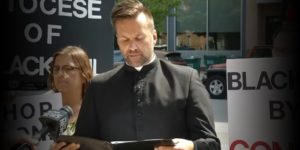
Bishop Malone was afraid of blackmail. Rev. Biernat told the bishop that he was aware that “there’s a lot of stuff Jeff has,” including information about a prominent priest who was allegedly having an affair. “Jeff is dangerous,” Malone said.
Rev. Biernat had his own experience with a priestly predator in the Buffalo diocese. In 2003, Biernat left Poland to attend Buffalo’s Christ the King Seminary. Once enrolled, was assigned to live with Rev. Art Smith at St. Thomas Aquinas Church in South Buffalo. Shortly after he arrived, Rev. Smith made his move. “Art Smith assaulted me sexually,” Biernat said. “At that time I knew enough English to order (a) latte at Starbucks, not to report the sexual assault,” he said. “You know, they don’t teach you these words in English second language classes.”
A document sent by Bishop Malone to the Vatican, and obtained by a local Buffalo TV station, confirmed Rev. Biernat’s account. “When Father Art was pastor in one of our city’s parishes, a seminarian noted that Father Art seemed to ‘groom’ him to get his affection. One night the seminarian recounted an incident where Father Art came to his room, came into his bed, and began to touch his genitalia.”
Rev. Smith is currently on administrative leave while a child sex abuse claim against him is decided by the Vatican. When contacted by reporters, he denied he assaulted Biernat. “That’s not true at all,” said Smith. “I know exactly what he’s talking about. All I will say is, we had a Christmas party, he had a little too much to drink, I admit I had a little too much to drink, and I told him I liked him more than he would ever know. And that was the end of it. It was nothing more.” 
Seminarian Biernat was in for a bigger shock than having his cock and balls drunkenly fondled. When he reported the incident to Auxiliary Bishop Edward W. Grosz, he received this chilling response: “He said it was my fault because I didn’t lock the door. And was Father Art drunk, because if he was maybe he did not know what he was doing? And then he said, ‘Ryszard, if you don’t stop talking about this you will not become a priest. You understand me? You understand me?”
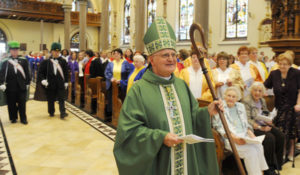
The soap opera continues. Now the diocese has cancelled all its credit cards, probably as a prelude to declaring bankruptcy. It is battling over 160 sex abuse lawsuits, and under investigation by the state attorney general’s office.
Bishop Malone’s fate is in the hands of Cardinal Timothy Dolan of New York and the Vatican. Undoubtedly Dolan’s antennae are quivering trying to find a signal on what to do. He has a finely tuned political sense. Gay priests do have loose networks, and the New York diocese has its own dirty underwear Dolan would like to avoid airing in the New York Post or feature article in the Times. “Cardinal Dolan has been following the situation in Buffalo very carefully,” said Joseph Zwilling, communication director for the New York archdiocese. “He is aware of his responsibilities under Vos estis lux mundi, he has been consulting extensively both with individuals in Buffalo, including Bishop Malone, clergy and laity.” No timetable on any actions. Mum’s the word.

Bishop Malone continues to defend his handling of the love triangle as “a very complex, convoluted matter.” In addition to the love triangle, he is also battling fallout from the pornographic pizza party involving Hamburg, New York pastors and Christ the King seminarians in April 2019. Read juicy details here and here. So far, his scandal management isn’t working as hoped.
The compassionless Auxiliary Bishop Edward W. Grosz still serves the diocese. Bishop Grosz was named in a string of sex abuse cover ups including one involving a six-year-old boy. The child was pressured to perform oral sex on a priest. A seminarian found the boy with semen on his hair, hand and shirt. He reported the abuse to Bishop Edward Head and Bishop Grosz. He heard no response until months later, when he said he talked to Father Peter Popadick, the longtime secretary to Bishop Head. “He stated something to the effect that…my letter wasn’t well-appreciated,” the seminarian said. “It wasn’t well taken.”
Rev. Ryszard Biernat and the Rev. Jeffrey Nowak are both on leave. The Erie County District Attorney has opened an investigation into Nowak’s sexual harassment of Matthew Bojanowski. Matthew Bojanowski withdrew from Christ the King Seminary at the end of August 2019.
What do the ordinary Catholics of Buffalo who are watching this soap opera unfold think and feel? Will they wonder about what every priest on the altar has he been doing before consecrating the body of Christ? What sexcapades, drunken parties and hush money is my weekly offering going to support? Who ARE these men I used to respect? Do I have enough gladness and hope left to continue being here?
I used to feel sympathetic and supportive of gay priests, but I don’t anymore. One bunch is screwing around like they live in the world’s biggest gay bar. The other bunch goes on with their lives and pretends that this behavior doesn’t involve them. Yes, it does. How can they write homilies with atrocities happening right in the next room? I would ask them to reflect on how to live a holy life with compromised morals.
In many ways, the most disgust is reserved for senior churchmen—straight and gay. In Buffalo, they were neither good shepherds nor asset managers. Why isn’t Pope Francis calling them to Rome and publicly knocking their mitres off their heads? THAT would make for an Emmy-award-winning show!
Bishop Bransfield’s lifestyle was too transparent. Archbishop Lori’s investigation of him wasn’t transparent enough.
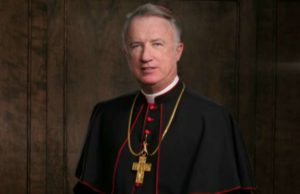
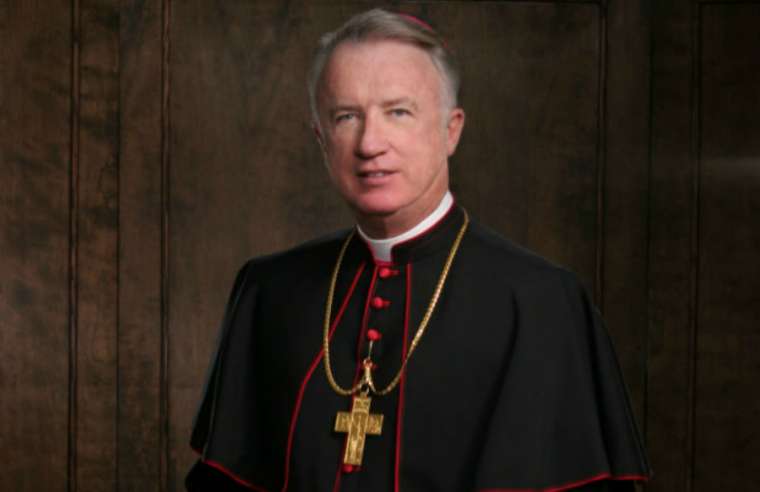
Bishop Michael J. Bransfield is the retired bishop of the Wheeling-Charleston, West Virginia diocese. He currently lives near Philadelphia, PA. Pope Francis accepted his resignation eight days after he turned 75 in September 2018. Bransfield was appointed bishop by Pope Benedict XVI in 2005. West Virginia is one of the poorest states in the U.S., and has very few Catholics, about 78,000 or just 4% of the population. Before he was named bishop, Bransfield was the rector of the Basilica of the Shrine of the Immaculate Conception in Washington, DC from 1990 to 2005. He arrived in West Virginia with a reputation for enjoying a “party atmosphere” from his time in Washington. Bishop Bransfield was a regular visitor to the Vatican. In 2010 he presented a cake to Pope Benedict for the pope’s 83rd birthday. He was elected president of the Papal Foundation by his fellow clerics. This nonprofit distributes millions of dollars to charitable projects on the pope’s behalf.
A few days after Bishop Bransfield’s retirement Pope Francis appointed Archbishop William E. Lori of Baltimore, Maryland as apostolic administrator, with a mandate to investigate allegations of sexual harassment of adults and financial improprieties by Bishop Bransfield.
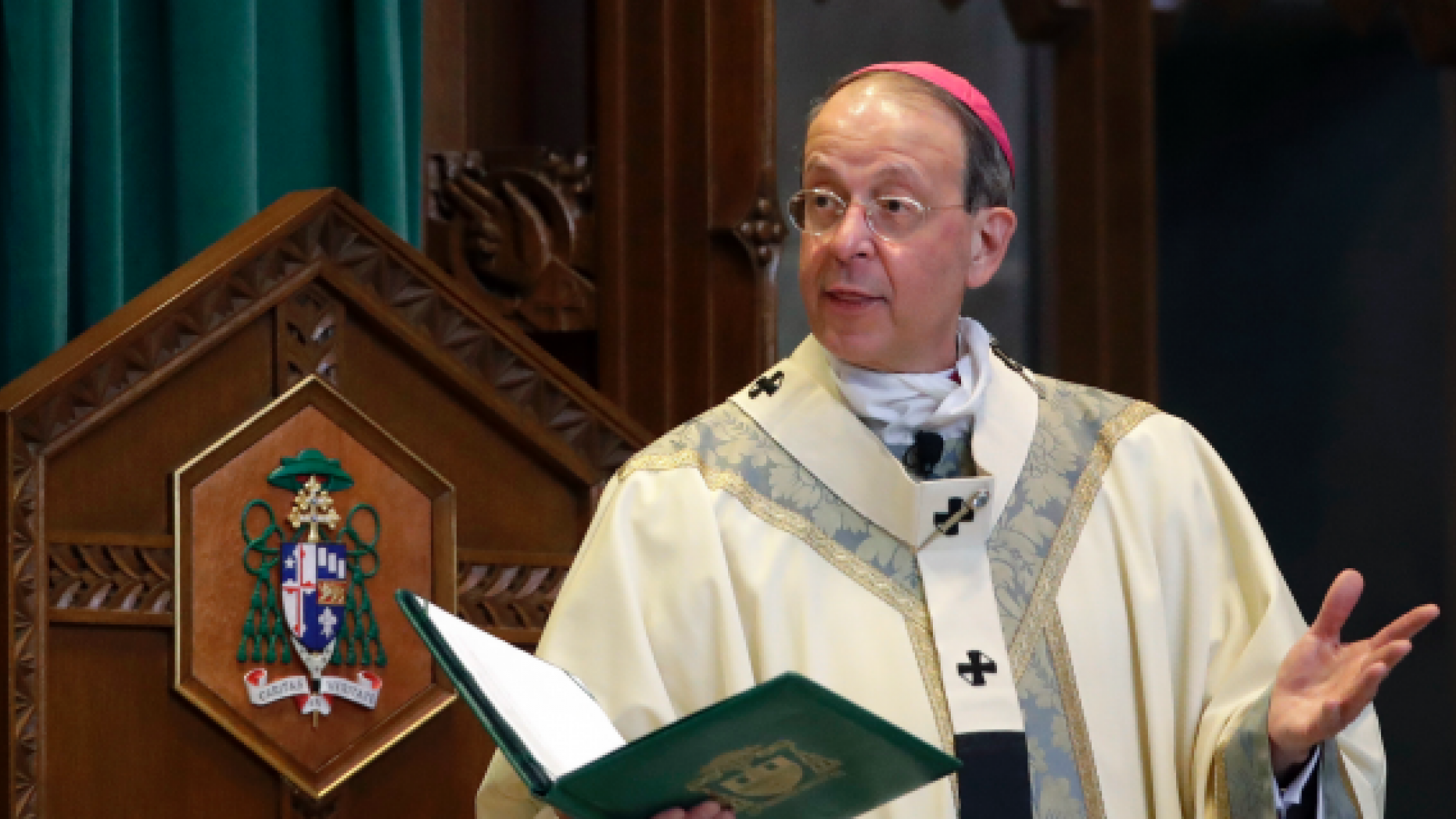
Archbishop William E. Lori is the archbishop of the Baltimore, Maryland archdiocese and metropolitan for the region. He was appointed archbishop of Baltimore by Pope Benedict XVI in 2012. In the 1990s, he served as secretary, chancellor, moderator of the curia, and vicar general to James Cardinal Hickey, Archbishop of Washington, DC who was a rabid tormenter of New Ways Ministry, a positive LGBT Catholic ministry. In 2001, Lori was appointed bishop of Bridgeport, Connecticut. While serving in Bridgeport, Lori fought against releasing the names of diocesan priests who were being sued for sexual abuse. Since then, he has gone up the U.S. Conference of Catholic Bishops career ladder rung by rung. He is the former chairman and current member of the USCCB Committee on Doctrine; Ad Hoc Committee on Universities and Colleges, Committee on Pro-Life Activities, Ad Hoc Committee for the Defense of Marriage, Ad Hoc Committee on Sexual Abuse, and chairman of the Ad Hoc Committee for Religious Liberty.
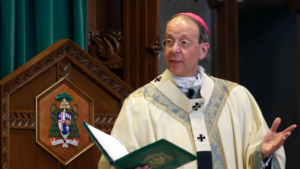
I encountered Bishop Lori in 2007, when he was still in Bridgeport but serving as the chair of the USCCB committee on Doctrine. The Vatican had recently published Ministry to Persons with a Homosexual Inclination: Guidelines for Pastoral Care. This document was extremely hurtful and negative to lesbian and gay Catholics. Along with another couple, my wife and I sent a letter to Bishop Lori describing our feelings about it and expressed a wish to meet with him face-to-face to discuss our lives as Catholic lesbians and mothers. We received a terse letter in reply, very dismissive and cutting in tone, telling us to reread the document and read the Catechism of the Catholic Church.
Archbishop Lori’s Investigation
Archbishop Lori’s investigation was probably sparked by an 8-page letter with supporting documents he received in August 2018 from Monsignor Kevin Quirk, Bransfield’s own judicial vicar. The letter detailed Bransfield’s monetary gifts. “It is my own opinion,” Quirk stated, “that (Bransfield) makes use of monetary gifts, such as those shown above, to higher ranking ecclesiastics and gifts to subordinates to purchase influence from the former, and compliance or loyalty from the latter.” Besides documentation on cash gifts, the letter details prescription drug and alcohol abuse by Bransfield, and explosive testimonies from young priests who worked as assistants to Bransfield, along with a third priest who had been offered the job, describing unwanted sexual advances, groping, and sexual abuse.
Shortly after Bransfield’s retirement, Pope Francis appointed Archbishop Lori to oversee an investigation into the charges. He and his team of five lay people completed a 60-page report of their findings in February 2019. It was forwarded to the Vatican for review and action. The report was made public on March 11, 2019 by the Archdiocese of Baltimore. The team examined multiple allegations of sexual harassment and suspicious financial records. They interviewed more than 40 people, including Bishop Bransfield. After the report was released Archbishop Lori announced restrictions on Bishop Bransfield’s ministry.
But it wasn’t over. Archbishop Lori made a few serious mistakes, and the investigation of Bishop Bransfield, already messy and potentially embarrassing, snowballed into a genuine financial and sexual scandal.
Archbishop Lori’s First Mistake
Archbishop Lori edited the final report to the Vatican, omitting the cash gifts given to him by Bishop Bransfield and 11 other high-ranking Vatican and U.S. clerics. His reasoning: the list of recipients would be a “distraction.” His edits came to light as part of a June 5, 2019 story by The Washington Post into the Bransfield case. Reporters were able to obtain both the original and final drafts of the report and a comparison of the two revealed the deletions. The investigators on Lori’s team did not raise any objection to his request to exclude mention of the gifts to cardinals and other church officials. After the redaction was published by The Washington Post, Archbishop Lori had a change of heart. He said, “looking back on this in hindsight, I would say this judgement call was a mistake.”
Also noteworthy, only after publication of The Washington Post expose did Archbishop Lori refunded $7,500 of the $10,500 he received from Bishop Bransfield to Catholic Charities of the Wheeling-Charleston, West Virginia diocese.
Archbishop Lori’s Second Mistake
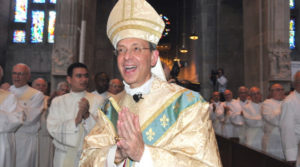
Archbishop Lori, as metropolitan of the region, had received complaints from Catholics in the diocese about Bishop Bransfield for six years prior to his investigation. He never did anything about them and didn’t mention them in his report.
On July 3, 2019 The Washington Post reported that concerns about Bishop Bransfield’s profligate spending were raised with senior Church authorities in the United States and Rome as early as 2012. Catholics in the diocese sent letters and emails to Archbishop Lori and the former apostolic nuncio, Archbishop Carlo Maria Vigano asking them to investigate Bishop Bransfield’s lifestyle and leadership. They were ignored.
Archbishop Vigano—whose histrionics about Cardinal Theodore McCarrick’s abuse of young priests and seminarians made the news repeatedly in 2018 and 2019—also received complaints about Bishop Bransfield. One parishioner, Linda Abrahamian from Martinsburg, West Virginia, wrote to him in 2013: “I beg of you to please look into this situation.” Vigano confirmed to The Washington Post that he had heard “rumors” about Bransfield’s sexual misconduct, but that they had never been “substantiated.” “Unfortunately, I do not recall having received any letter of this nature,” Vigano said, “which I would certainly remember and which I would have followed up on. That being said, the Nunciature receives many complaints every single day about all sorts of things, and it is probable enough that unfortunately this letter was not considered to be serious enough to be brought to my attention. However, the letter, if it was received, is probably filed in the archives of the Nunciature, thus it may be verified.”
I bet. Vigano is the same official who tried to quash an investigation into Minneapolis Archbishop John Nienstedt, who also had a predilection for seminarians and young priests. In 2014 Vigano ordered that documents implicating Nienstedt in an independent sex abuse investigation be destroyed.
Bishop Bransfield’s Gifts
In his 13-year reign Bishop Michael J. Bransfield gave cash gifts to fellow clerics totaling $350,000. He wrote personal checks and was reimbursed with church money. Bransfield sent the checks, many for amounts in four figures, to 137 clergymen, including two young priests he is accused of sexually harassing and more than a dozen cardinals. Some of the “gifts” were for delivering sermons or speeches, other checks were for birthdays or Christmas. Many did not have a notation. The recipients of the largest amounts were among the most influential men in the church in the U.S. and Rome. They included:
Archbishop William E. Lori (archbishop of Baltimore) – $10,500
Archbishop Carlo Maria Vigano (former papal nuncio to U.S.) – $6,000
Cardinal Raymond Burke (former Prefect of the Supreme Tribunal of the Apostolic Signatura) – $9,600
Cardinal Donald Wuerl (former archbishop of Washington, DC) – $23,600 ($10,000 for a church in Rome)
Cardinal Timothy Dolan (archbishop of New York)-
Cardinal Kevin Farrell (Prefect of the Dicastery for the Laity, Family and Life)- $29,000 (for renovations on Rome apartment)
Cardinal Bernard Law (former archbishop of Boston, Archpriest of the Basilica di Santa Maria Maggiore)- $4,800
Archbishop Peter Wells (former official at the Secretariat of State)
Rev. Michael Weston, Monsignor Walter Rossi, Monsignor Vito Buonanno – Basilica of the National Shrine of the Immaculate Conception (Rossi succeeded Bransfield as rector) – collectively $10,800
Monsignor Kevin Irwin (former head of the theology department, Catholic University of America) – $6,500
Rev. Pietro Sambi (former apostolic nuncio to U.S.) – $28,000
Rev. Richard Mullins (priest in Washington, DC)
Rev. Sean Bransfield (nephew, vice chancellor of the archdiocese of Philadelphia) – $9,175
Monsignor Brian Bransfield (nephew, general secretary, US Conference of Catholic Bishops) – $1,350
Cardinal Edmund Szoka (top Vatican official) – $500
Bishop George V. Murray (Youngstown, Ohio diocese) – $3,000
Men who accused Bishop Bransfield (during and after alleged sexual misconduct) – $50-$300
Rev. Frederick P. Annie, Vicar General, Diocese of Wheeling-Charleston, WV (Bransfield’s most senior aide) – The three men who held the role received a total of $38,000)
A breakdown of Archbishop Lori’s gifts showed he was given $5,000 when appointed archbishop of Baltimore, $3,000 for travel expenses and honoraria for preaching at two Red Masses in the Diocese of Wheeling Charleston (an annual event to pray for those in the judicial and legislative branches of government) and the rest as $500 gifts given on the holidays.
Even though it is not common practice for bishops to give cash gifts, “usually, if anything, it’s a poinsettia at Christmas or lilies at Easter,” Lori said, he “simply (thought) Bransfield was being generous and kind” when he gave him money. “I didn’t think much more about it than that.”
Nary a thought flickered across his mind…a $5,000 gift from the bishop of one of the poorest dioceses in the U.S.?
Bishop Bransfield – Where the Money Came From
Bishop Bransfield had his own cash kitty to play with – an endowment to the diocese of oil-rich land in Texas that generated an average of $15 million annually.
The roots of this unusual wealth for the diocese date back to the late 1800s, to a friendship struck on a transatlantic cruise ship between a bishop from Wheeling and a New York heiress. When she died in 1904, Sara Catherine Aloysia Tracy left most of her estate to the diocese, including a large tract of land in west Texas. Oil was discovered there decades later.
The income generated from mineral rights generates an average of $15 million a year, funding an endowment of nearly $230 million. Bishop Bransfield wrote checks from his personal account and had the endowment reimburse him. He used over $2.4 million on travel, much of it personal, flying in chartered jets and staying in luxury hotels. He had a private chef. He also used $324,000 for clothing, jewelry and “personal services.” The diocese paid $4.6 to renovate his residence.
According to the report, Bishop Bransfield and several subordinates spent an average of $1,000 a month on alcohol. When Bransfield was not traveling, fresh flowers were delivered daily to the chancery, at the cost of $100 a day, almost $182,000 in total. Bransfield’s spending reminds me a lot of the former archbishop of Newark, NJ, John J. Myers, another pleasure-loving prelate in a poor diocese. A contemporary of Bransfield, Myers also enjoyed destination vacations and lavish spending on his residence.
Why was Bishop Bransfield able to get away with it for so long? He was nasty, vindictive and intimidating. The men around him were afraid for their positions and careers. They did nothing and said nothing.
A partner at the auditing firm hired by Bransfield told investigators he was “afraid to challenge Bishop Bransfield’s decisions because of the bishop’s position and his overall demeanor.” The diocesan staff said and did nothing out of fear of retaliation and retribution. They opted to protect their positions and careers. Bishop Branfield’s two top aides, Monsignor Kevin Quirk, the judicial vicar, and vicar general Rev. Frederick P. Annie, discussed concerns about the bishop’s conduct with young men but did nothing to stop it, the report said. “Tell it to the Nuncio,” Annie said when Quirk raised the issue. Annie acknowledged to investigators that taking a complaint about the bishop to the nuncio would have been “career ending.”
Intervention would also have ended their cash gifts. Vicar General Annie, and the two other men who served in the position, received $38,000. Pietro Sambi, papal nuncio from 2005-2011 took in $28,000 over the years. Carlo Maria Vigano, papal nuncio from 2011-2016 got $6,000 during that period. There is no mention of Pope Francis’ appointee, Archbishop Christophe Pierre (2016-present). Perhaps he didn’t take the bait.
Bishop Bransfield – Life as a Gay Bishop
Archbishop Lori outlined details of what the investigation had found about Bishop Bransfield’s piggish behavior: “The team uncovered a consistent pattern of sexual innuendo and covert suggestive comments and actions toward those over whom the former bishop exercised authority.”
The report cites nine men in the Wheeling-Charleston diocese who accused Bransfield of running his hands over their genitals, kissing them, exposing himself, and commenting on their sexual attractiveness. Diocesan officials witnessed Bransfield’s “predatory” behavior toward altar servers, a tendency troubling enough that Monsignor Quirk tried to make sure that no altar server was left alone with him.
One seminarian recalled sitting on Bransfield’s lap, being kissed by the bishop and thinking, “I either do this or completely reinvent my life.” Bransfield asked him to take his pants off.
Seminarians and young priests asked for help. They were instructed instead to “make your boundaries clear,” or told they had no choice but to join Bishop Bransfield on trips or sleepovers at his residence. Bransfield used alcohol, oxycodone and other prescription drugs, which “likely contributed to his harassing and abusive behavior,” the report states.
In an interview with The Washington Post, Bishop Bransfield disputed the allegations, saying “none of it is true,” but declined to go into detail since his attorneys had advised him not to comment. “Everybody’s trying to destroy my reputation,” Bransfield said without elaborating. “These people are terrible to me.”
In his June 5, 2019 letter to priests and lay faithful of the Wheeling-Charleston diocese, Archbishop Lori remarked: “I am deeply pained by and sorry for the harm that the former bishop caused to those he was charged with shepherding in a spirit of Christ-like humility, service, pastoral care and charity. There is no excuse, nor adequate explanation, that will satisfy the troubling question of how his behavior was allowed to continue for as long as it did without the accountability that we must require of those who have been entrusted with so much – both spiritual and material – as bishops and pastors.”
Archbishop Lori’s words are strong and clear. Now, the hard part. Bishops need to get tough with rogue bishops—thieves, liars, sexual abusers and men who don’t practice what they preach. They need to confront them, and they need to eliminate them from their ranks. No more live and let live and looking the other way. Starting with you, Archbishop Lori! This is also true for diocesan officials. All too often the desire for a cushy career outweighs their sense of decency. Get some backbone. Blow the whistle on corrupt prelates that are a cancer and rot on the faith.
Update – A Penthouse, Limousines and Private Jets: Inside the Globe-Trotting Life of Bishop Michael Bransfield – from Hear Our Voices, The Gay Catholic Priests’ Blog.
On October 15, 2017 Pope Francis announced a special synod on the Pan-Amazonian Region to take place in Rome. It is scheduled for October 6-27, 2019. 
The synod arose out of Pope Francis’ 2015 encyclical Laudato Si, “Caring for Our Common Home,” which called for action on global warming, environmental pollution and pinpointed the Amazon region as a chief area of concern.
The Pan-Amazon region spans over two million square miles within nine countries, including Brazil, Peru, Ecuador, Bolivia, Columbia, Venezuela, Suriname, Guyana and French Guyana. It is home to 33 million people, among them 3 million indigenous people representing 400 different tribes. It is the source of one-fifth of the world’s fresh water, one-fourth of all oxygen and more than one-third of global forest reserves.
Taking part in the synod will be bishops from the nine countries encompassing Amazonia, presidents of the seven bishops’ conferences, and representatives of non-governmental organizations that work in the region. Chief among them will be REPAM, or Red Eclesial PanAmazonica, an ecclesial network of bishops created in 2014 to promote the rights and dignity of people living in the Amazon. It is backed by CELAM, the Latin American Bishops’ Conference. Caritas Internationalis is a founding member. REPAM embodies the promise Pope Francis made in the Amazon town of Maldonado, Peru to affirm “a whole-hearted option for the defense of life, the defense of the earth and the defense of cultures.”
The 16-page preparatory document for the synod was published on June 8, 2018. It is titled “Amazonia: New Paths for the Church and for an Integral Ecology.”The document was written by the Vatican’s office for the synod with the help of an 18-member council appointed by Pope Francis to oversee the 2019 meeting. The synod council included three cardinals, 13 bishops, one nun and a layman. Most members are from countries in the Amazon region. The document is organized as a Preamble, Section I – Seeing, Section II – Discernment, Section III – Action, and Questionnaires that were widely circulated to provide material for each of the three sections.
The synod’s preparatory document makes clear that central issues will focus on environmental protection, the rights of indigenous people, and evangelization. But what is articulated within these issues will ignite change not only in the Amazon, but throughout the Catholic Church.
It is obvious that most pundits from Europe and North America who follow church happenings did not read this document carefully. If they did, they would be shocked. This synod is not about a group of natives in the Amazon rainforest with a few mentions of climate change thrown in. Pope Francis and the Synod Council are attempting to shift Catholic culture and religious practice from the Eurocentric and clerical sub-culture model to one drawn from values and cultures based in the Southern Hemisphere, with ripples extending to Africa and Asia. Europe’s domination of 1,000 years is ending. 
The clash of values that dominates so much of the Eurocentric Church today will be subsumed into other cultural debates. There, they may find a new voice, fade away or be viewed as irrelevant. How important are religious liberty, same-sex marriage, denying communion to pro-abortion politicians, sex abuse and cover up, women priests, married priesthood, conscience rights, “authentic” Catholic definitions, and “reform of the reform” of Vatican II in Amazonia? Newer issues like racism, rights of indigenous people, migrants and immigration, gender theory, LGBT civil rights, lay involvement, habitat protection, and economic equity should get more traction, but the results will be a mixed bag of blessings for both progressives and conservatives.
Here is what I see emerging from the Amazonia Synod:
- A new emphasis on “Integral Ecology” – everything is connected and environmental abuse as sin
- Evangelization to where people are physically and spiritually–however remote
- Older married men ordained as priests to administer the sacraments
- Increased role in ministry and governance for women
- A cultural and spiritual sift away from a Eurocentric Catholicism
Each of the sections of the preliminary document has markers and flash points intimating where Pope Francis and the Church are heading with this Synod.
- Identity and Cries of the Pan-Amazonia
“Nonetheless, the wealth of the Amazonian rainforest and rivers is being threatened by expansive economic interests, which assert themselves in various parts of the territory. Such interests lead, among other things, to the intensification of indiscriminate logging in the rainforest, as well as the contamination of rivers, lakes and tributaries (due to the indiscriminate use of agro-toxins, oil spills, legal and illegal mining, and byproducts from the production of narcotics.) Added to this is drug trafficking, which together with the above puts at risk the survival of those peoples who depend on the region’s animal and plant resources.” 
“For the indigenous peoples of the Amazon basin, the good life comes from living in communion with other people, with the world, and with the creatures of their environment, and with the Creator. Their diverse spiritualities and beliefs motivate them to live in communion with the soil, water, trees, animals, and with day and night. Wise elders – called interchangeably “payes, mestres, wayanga or chamanes”, among others – promote the harmony of people among themselves and with the cosmos. Indigenous peoples are a living memory of the mission that God has entrusted to us all: the protection of our common home.”
2. Toward a Pastoral and Ecological Conversion
“This social – and even cosmic – dimension of the mission of evangelization is particularly relevant in the Amazon region, where the interconnectivity between human life, ecosystems, and spiritual life was, and continues to be, apparent to the vast majority of its inhabitants.”
“Integral ecology, then, invites us to an integral conversion. This entails the recognition of our errors, sins, faults, failures and omissions by which we have harmed God’s creation and leads to heartfelt repentance. Only when we are aware of how our lifestyles – and the ways we produce, trade, consume, and discard – affect the life of our environment and our societies can we initiate a comprehensive change of direction.”
3. New Paths for a Church with an Amazonian Face
“The Church is called to deepen her identity in accordance with the realities of each territory and to grow her spirituality by listening to the wisdom of her peoples. Therefore, the Special Assembly for the Pan-Amazonian Region is invited to find new ways of developing the Amazonian face of the Church and to respond to situations of injustice in the region, such as the neocolonialism of the extractive industries, infrastructure projects that damage its biodiversity, and the imposition of cultural and economic models which are alien to the lives of its people.”
“In this sense, Vatican II reminds us that all the People of God share in the priesthood of Christ, although it distinguishes between common priesthood and the ministerial priesthood. This gives way to an urgent need to evaluate and rethink the ministries that today are required to respond to the objectives of “a Church with a native face.”
“It is necessary to identify the type of official ministry that can be conferred on women, taking into account the central role which women play today in the Amazonian Church. It is also necessary to foster indigenous and local-born clergy, affirming their own cultural identity and values. Finally, new ways should be considered for the People of God to have better and more frequent access to the Eucharist, the center of Christian life.”
The Synod’s preparatory document cites a wide swath of church documents, three provide the biggest stamp:
1. Laudato Si – (“Praise Be to You”) The 2nd encyclical of Pope Francis has the subtitle, “On Care for Our Common Home.” In it, Pope Francis critiques consumerism and irresponsible development, and laments environmental degradation and global warning. It calls on the peoples of the world to act. The encyclical was published on June 18, 2015.
2. The Aparecida Document – This document summarized the 2007 meeting of CELAM—the regional Episcopal Conference of Latin America and the Caribbean. The meeting was held in Aparecida, Brazil, and was chaired by Cardinal Jorge Bergoglio, the future Pope Francis. In the document, the Latin American bishops expressed what they believed to be keys in keeping Catholicism alive and relevant in Latin American. Those “keys” included a preferential option for the poor and marginalized, and a serious concern for the environment.
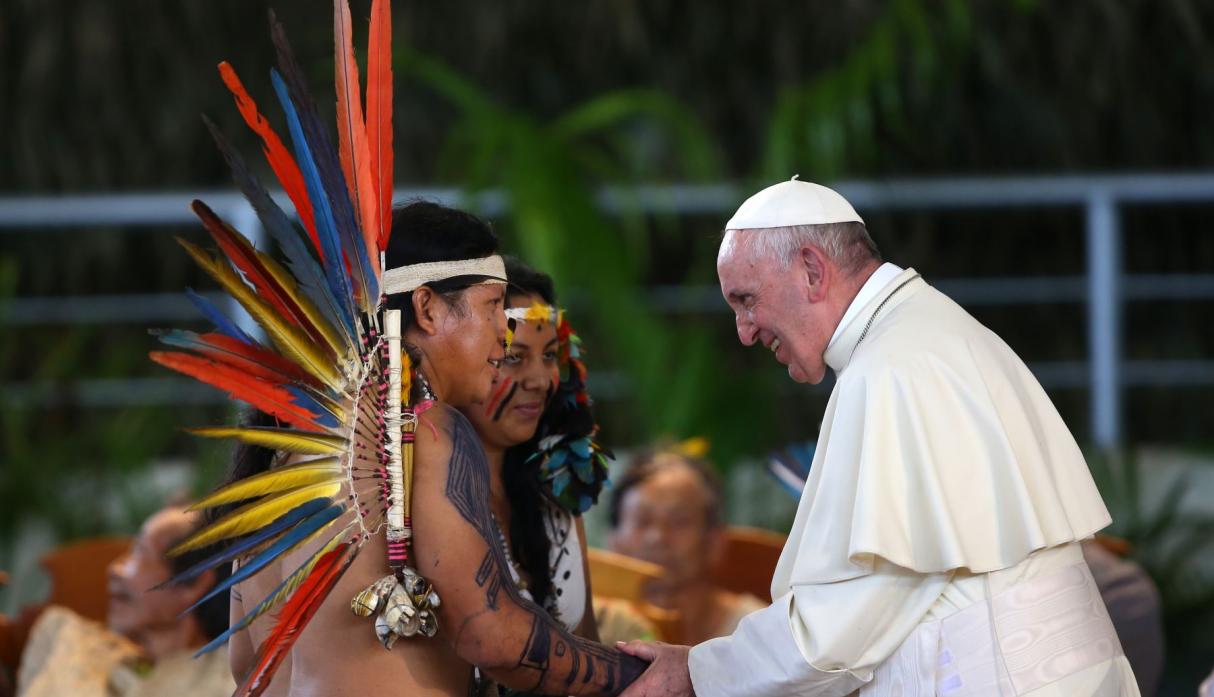
3. Pope Francis’ January 19, 2018 Address to the Indigenous People of Amazonia at Maldonado, Peru – During his trip to Chile and Peru, Pope Francis met and addressed thousands of native Amazonians in an indoor stadium at Puerto Maldonado, a city on Peru’s Amazon frontier. It is the capital of Madre de Dios, a region plagued by illegal mining and human trafficking. In his remarks, the pope noted that the “native Amazonian peoples have probably never been so threatened on their own lands as they are at present.” He spoke about threats from extractive exploitation, environmental contamination and illegal mining. He also addressed the oppression of native people by certain policies and movements under the guise of preserving nature that deprive them of their land, natural resources and livelihoods. Pope Francis promised participants to affirm a “whole-hearted option for the defense of life, the defense of the earth and the defense of cultures.”
There are several key players in the development of the Synod Council and preparatory document. Since I don’t read Spanish, and there is very little coverage of South America by U.S. journalists, I may have missed a few names but I believe I netted the biggest fish.
Pope Francis
Born in Buenos Aires, Argentina on December 17, 1936, Jorge Mario Bergoglio became Pope Francis on March 13, 2013, when he was named 266th pope of the Roman Catholic Church. Bergoglio, the first pope from South America, took his papal title after St. Francis of Assisi of Italy. The first Jesuit pope, Bergoglio was ordained in 1969, and from 1973-1979 was the provincial superior for Argentina. Prior to his election as pope, Bergoglio served as archbishop of Buenos Aires from 1998-2013. He was named a cardinal by Pope John Paul II in 2001. In his six years as pope, Francis has championed the world’s poor and marginalized people, emphasized mercy over rules, and been actively involved in environmental advocacy and political diplomacy.
“We are not faced with two separate crisis, one environmental and the other social, but rather one complex crisis which is both social and environmental.”

Cardinal Lorenzo Baldisseri
Cardinal Baldisseri has served as general secretary of the Synod of Bishops since September 21, 2013. He introduced and explained in depth the Amazonia synod’s preparatory document during the Vatican press conference on June 8, 2018. Hand-picked by Francis to reorganize the Synod of Bishops, Cardinal Baldisseri is a veteran of the Vatican diplomatic corps. He has served as apostolic nuncio to Paraguay, India, Nepal and Brazil (2002-2012). In Brazil, he negotiated an agreement regulating the juridical status of the church.
“Although the theme refers to a specific territory, such as the Pan-Amazon region – and this is why we speak about the “Pan-Amazon Synod” – the reflections that concern it go beyond the regional context, because they regard the whole Church and also the future of the planet. These reflections are intended to bridge to other similar geographical realities such as, for example, the Congo basin, the Central American biological corridor, the tropical forests of Asia in the Pacific, and the Guarani aquifer system. This great ecclesial, civic and ecological project allows us to extend our gaze beyond their respective borders and to redefine pastoral lines, making them suitable for today’s times. For these reasons too the Synod will be held in Rome.”
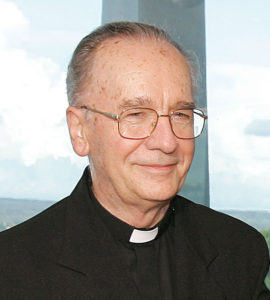
Cardinal Claudio Hummes
Pope Frances chose Brazil’s Cardinal Claudio Hummes to serve as regulator general of the October synod on Amazonia. The nomination of the 84-year-old retired archbishop of Sao Paulo was announced at the Vatican on May 4, 2019. The regular is responsible for providing a comprehensive outline of the synod’s theme at the beginning of the meeting and for summarizing the speeches of synod members before work begins on concrete proposals for the pope. Cardinal Hummes was a former perfect of the Congregation for Clergy and has been a close friend of the pope since Jorge Mario Bergoglio was archbishop of Buenos Aires. Cardinal Hummes currently serves as president of REPAM, or the Red Eclesial Pan-Amazonica (or Pan-Amazonian Ecclesial Network.) Founded in 2014, REPAM is a network backed by the Latin American Bishops Conference to promote the rights and dignity of people living in the Amazon. Caritas Internationalis is a founding member.
“Back in 2015 the pope started to tell me, “I’m thinking of convening a meeting of all the bishops of Amazonia. As of yet, I don’t know what type of meeting or assembly, but I think that it could even be a synod.” He said to me, Let us pray about it together, and he began to speak to the bishops, to the episcopal conferences of the Amazonian region, about how to have an assembly, and so in his heart there grew the idea of a synod, and eventually in 2017 he convoked it. We have worked hard for the synod, and we will continue to do so in this very important service for the future. The synod serves to find and trace new paths for the Church.”
“We know now there is another step to take: we have to promote an indigenous Church for the indigenous peoples, to help give birth to and nurture the growth of an indigenous Church. The aboriginal communities that hear the Gospel proclamation in one way or another, and that embrace it, which is to say, they welcome Jesus Christ, have to be able to ensure that, through an opportune process, their faith can become incarnate and inculturated in their traditional reality. Then, in the context of their culture, identity, history and spirituality, an indigenous Church can arise with its own pastors and ordained ministers, always united within itself, and in total communion with the universal Catholic Church, but inculturated in indigenous cultures.”

Cardinal Ricardo Barreto Jimeno
A Jesuit, and archbishop of Huancayo, Peru since 2004, Cardinal Barreto is vice president of the Peruvian bishops’ conference. He is also vice president of REPAM (Red Eclesial Pan-Amazonica). According to Cardinal Barreto, “new paths” will be defined during the synod, directed toward care for creation and evangelization.
Cardinal Barreto has long been a proponent of environmental protection. Back in 2005 he told his brother bishops during a synod that bread and wine offered at the altar were no good if the land they came from was not properly cared for. “I said that if we offer bread from land that’s contaminated, we are offering God a contaminated fruit. And the same for wine…I remember that the bishops looked at me as if they were saying, ‘What does the Eucharist have to do with ecology?’”
“Too many people think the indigenous in the Amazon are savages with nothing to teach us. ..as one Amazonian indigenous person told me, the savages are the ones who wear suits and ties and have money because they not only exploit natural resources irrationally but also expel (the indigenous people) from their territories and allow those from the outside to attack their culture simply to profit.”

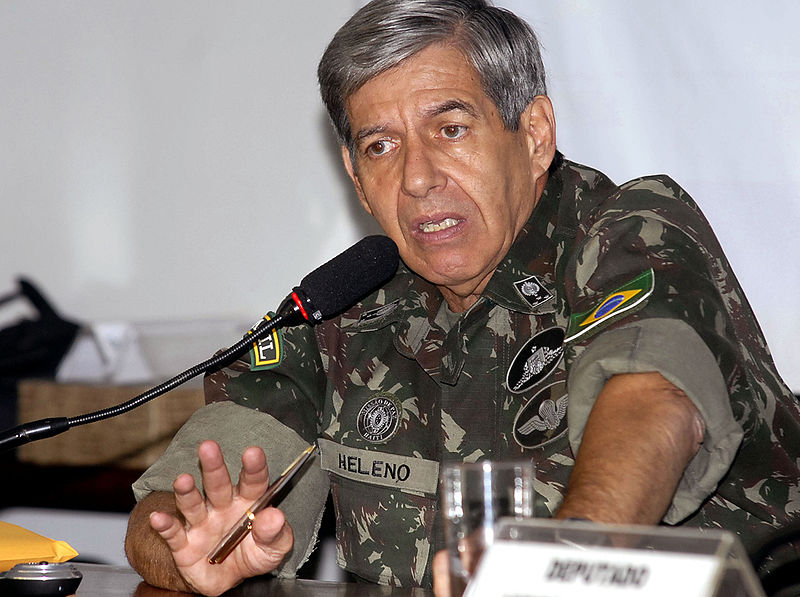
General Augusto Heleno Ribeiro Pereira
Augusto Heleno, 72, is a Brazilian politician and retired general. He was military commander of the Amazon and chief of the Department of Science and Technology of the Army. He was chosen by Brazil’s newly elected president, Jair Bolsonaro, to head the Institutional Security Cabinet, an executive level office of the federal government responsible for assistance to the president on matters of national security and defense policy.
Bolsonaro campaigned on promises to end protections of the Amazon rainforest and limit Brazil’s indigenous peoples’ rights to designate land in the river’s sprawling basin as preserves. In one of his first acts as president, he gave responsibility for indigenous preserves to the Agriculture Ministry, which is seen as heavily influenced by agribusiness interests.
A major Brazilian newspaper, O Estado de S. Paulo, reported on February 10, 2019 that the synod has become a national concern for the Brazilian government. General Augusto Heleno was quoted in the story as saying, in reference to the synod, “We are worried about it and want to neutralize it.” The government’s strategy for neutralizing the Amazonia synod reportedly includes planting intelligence agents to monitor preparatory meetings and putting diplomatic pressure on the Italian government to intercede with the Vatican to avoid, or at least tone down, criticism of Brazil’s Amazon policies.
“There are foreign (non-governmental organizations) and international authorities who want to intervene in our treatment of the Brazilian Amazon…I’m worried that this Synod is going to interfere in our sovereignty. We know what we have to do. We know how to do sustainable development, to stop deforestation.”

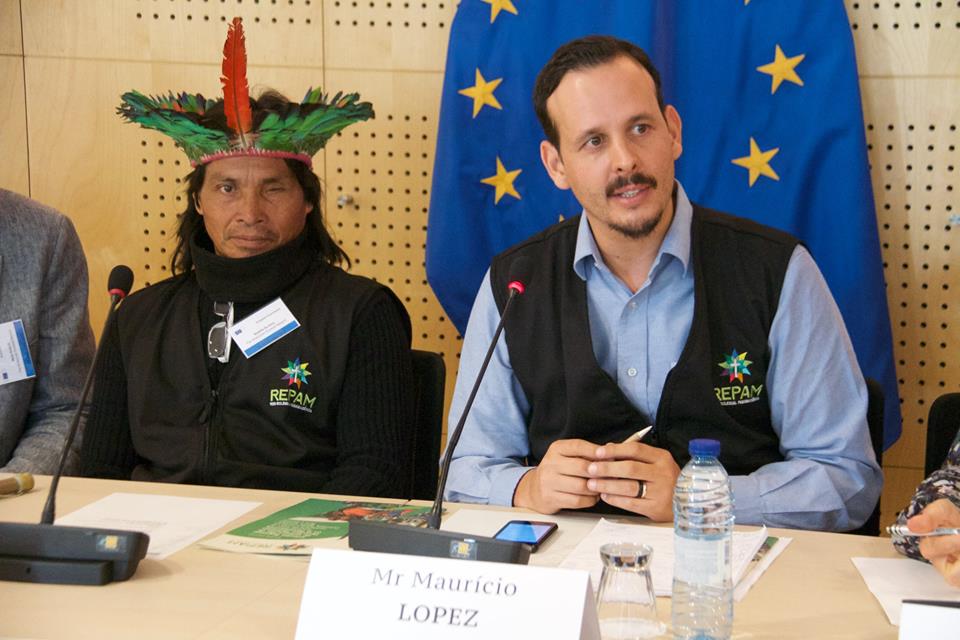
Mauricio Lopez
Mauricio Lopez is the executive secretary of REPAM. He was the one lay person appointed to the Synod Council by Pope Francis. Lopez grew up in Mexico and was educated in Jesuit schools. He and his wife, who is Ecuadorian, moved to Ecuador over a decade ago. In 2009, he took a trip to the part of the Amazon basin that sits on Ecuador’s eastern borders. “I came by bus from the highest mountains with snow,” he described, and suddenly I entered this beautiful place, where I saw the biggest river, the entrance into the Amazon, and how the flora and fauna were always changing as we went down, down, down. The temperature changed radically, and I felt, too, a change within me,” he said.
“The Amazon reality requires us to be a braver and more prophetic church.”
The Amazonia initiative brings back an echo of my own past. 
Back in the mid-1970s, as a young woman in Alaska, I fought for large tracts of Alaskan lands to be preserved as wilderness areas–national parks, refuges and monuments. I wanted government agencies to insist on environmental protections for areas that were mined, logged or slated for oil and natural gas extraction. The native peoples of Alaska—Tlingit, Haida, Tsimshian, Athabascan, Aleut, Inupiat and Yupik were different, but each group was deeply connected to the land by a deep love for it, cultural heritage and identity. One connection was through the subsistence lifestyle—fishing, trapping, hunting and harvesting on their ancestral lands.
During that time, I never heard a religious person—priest, religious sister, bishop, pastoral associate, anyone—speak up for Alaska natives or for wise natural resources management. At that time, the Catholic church made no connection between Nature and Faith. I missed having my faith strengthen my environmental activism and support for native land rights; and my love for the land and forest strengthen my spirituality and religious conviction.
It now seems like a dream come true; one I have waited almost 40 years to see. Thank you, Pope Francis, and everyone who is making the Amazonia Synod happen. I’ll be praying for you and us.
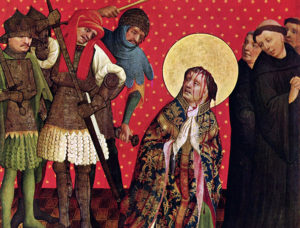
The headline read: “Thomas Becket’s bloody tunic returns to Canterbury 850 years after he died. Vatican to send back historic relic worn by archbishop as he was brutally murdered.” In 2020, Canterbury Cathedral will mark the 850th anniversary of Becket’s assassination, and the 800th anniversary of the creation of his shrine.
Celebrating Becket
Canterbury Cathedral, where Becket was killed on December 29, 1170 following a series of bitter disputes with King Henry II, became a shrine after Pope Alexander III made Becket a saint three years following the murder. It drew thousands of pilgrims (think of Canterbury Tales by Chaucer) until the shrine was destroyed by King Henry VIII in 1538. 
Spotting a way to make money and draw visitors, Canterbury Cathedral is set to host a series of celebrations in 2020 to mark the anniversaries, including a joint church service by Catholics and Anglicans.
I wonder how they are going to navigate a potential P.R. nightmare: Archbishop Becket was killed because he refused to permit priests and others claiming clerical status to be tried in the King’s courts for rape, murder, theft and other serious crimes. This sounds a lot like the sex abuse scandals today–cardinals, bishops, church officials and popes refusing to turn criminal clerics over to secular authorities. Their top priority was to shield themselves and their priests from public exposure and civil justice. In the end their stance was about power, privilege and revenues. 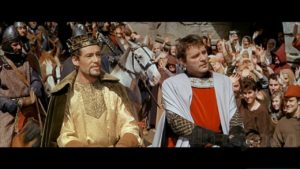
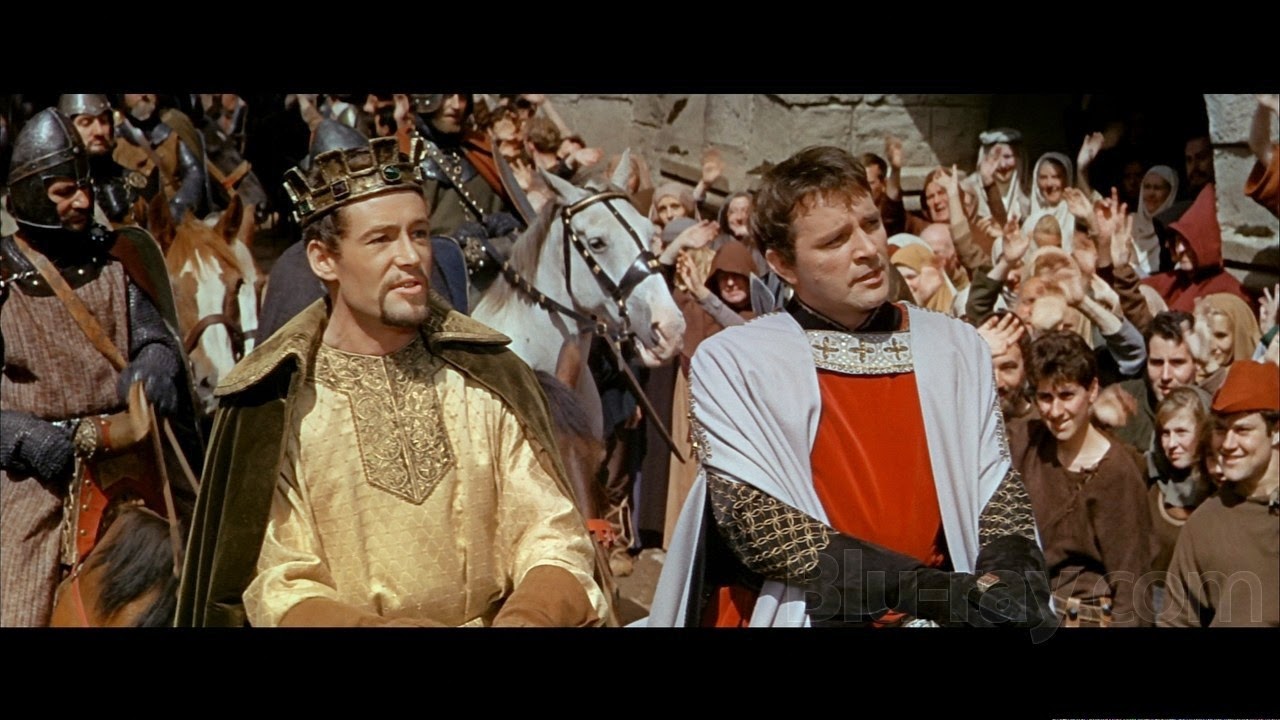
The 1964 film, Becket, starring Richard Burton as Becket, and Peter O’Toole as Henry II gave a sympathetic portrayal of Becket as a principled man standing up to civil authority. Three decades of sex abuse scandals in the Catholic Church has ended portrayals of bishops as principled men. Most people today would clap and cheer to see a bishop knocked down. They prefer to rely on civil authorities for justice, not shifty archbishops or opaque canonical courts.
The King’s Friend
Thomas Becket, also known as St. Thomas of Canterbury, was born in London in 1119 or 1120. His parents were both of Norman descent. Becket was a self-made man. Recommended by Theobald of Bec, Archbishop of Canterbury, he was appointed Lord Chancellor in 1153 by King Henry II. They became very close friends. Henry even sent his son and heir, young Henry. to be educated in Becket’s household. 
Some clues can be surmised about Becket’s character from stories about him: he was proud, vain, sensitive about his prerogatives and authority, but also warm and protective. He faced his death with courage and resolve. He sought to protect his monks from the knights who came to kill him. Henry’s son said he received more fatherly love from Becket in one day than he did from his father, the king, in a lifetime. Becket was described as dressing lavishly and extravagantly. While riding together through London on a cold winter’s day, King Henry saw a pauper shivering in his rags. He asked Becket if ht would not be charitable to give the man a cloak. Becket agreed that it would. The King grabbed Becket’s expensive fur cloak and a tussle ensued. The King finally succeeded in ripping it away and threw it to the beggar. Becket was very unhappy and offended.
Archbishop of Canterbury
Everything changed in 1162, when Archbishop Theobald of Canterbury died and his seat became vacant. King Henry immediately saw an opportunity to increase his influence over the church by naming his loyal adviser and friend, Thomas Becket, to the highest ecclesiastical post in the land. The pope agreed on his selection. In preparation for his appointment, Becket was ordained a priest on June 1, 1162. The next day he was ordained a bishop, and later that afternoon made Archbishop of Canterbury. 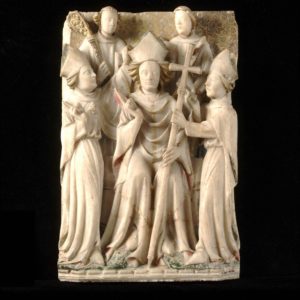
Becket changed on becoming Archbishop of Canterbury. He defended the rights of the church. He exhibited concern for the poor. He became an ascetic. He wore a filthy hair shirt under his vestments. This change is a great mystery, for which none of the chroniclers agree on an answer. Why did Becket evolve from a greedy and luxury-loving man, a loyal chancellor and friend, to a obstinate and contentious churchman? Did he take his appointment seriously? Was it an opportunity to be independently powerful from his friend, King Henry? Or did he really have a spiritual awakening and conversion? I have no answer, but lean toward the idea he found his vocation.
The Benefit of Clergy
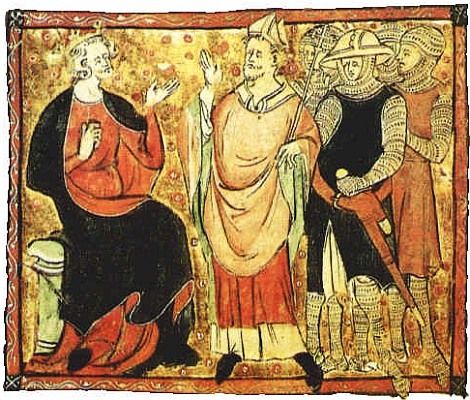
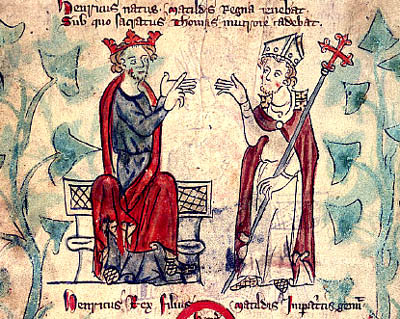
The big fissure between King Henry and Archbishop Becket came over “the benefit of clergy” (Privilegium Clericale). When accused of a crime members of the clergy could claim they were outside the jurisdiction of secular courts and be tried in an ecclesiastical court under canon law instead. This usually resulted in a much lighter sentence or punishment. King Henry was determined to increase his control over the church by eliminating this custom. He wanted clerics convicted of serious crimes to be handed over to civil authorities for punishment. The church hierarchy disagreed, arguing that this would undermine the principle of clerical immunity. 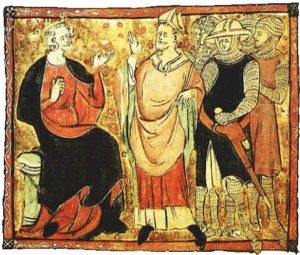
Two violent crimes brought the problem to a head. A cleric in the diocese of Worcester was accused of mudering a man in order to rape his young daughter. King Henry ordered the man to be tried in a civil court. Becket intervened, commanding the Bishop of Worcester to put the man in an episcopal prison and not allow royal officials to touch him. In another notorious case, Philip of Bois, a canon of Bedford, was acquitted in the court of the Bishop of Lincoln on the charge of murdering a knight. Pushed by the family of the knight seeking justice, the Sheriff of Bedford attempted to re-open the case in a royal court. He was resisted, and furiously abused by Philip, the Bedford canon. Henry angrily demanded justice on the charge of homicide and on an additional charge of contempt. Becket attempted to solve the problem by banishing Philip for a few years, but the whole affair merely showed the inadequacy of canon law in punishing murderers, rapists and thieves. 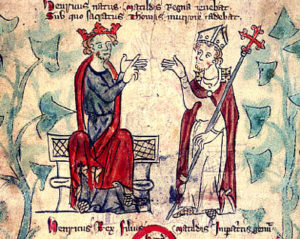
The rift between the two men grew. King Henry felt betrayed. Archbishop Becket distrusted the motives of the king. The conflict became bitterly personal. Becket went into exile in France. Henry finally got to Becket through the archbishop’s pride. On May 24, 1170, the king had his son, Henry the Younger, crowned at Canterbury by the Archbishop of York. Becket could not stand the snub to the prestige of his office, and two months later the king and archbishop agreed to a compromise which allowed Becket to return and re-crown Henry’s son in a second ceremony.
While in France, Becket excommunicated the Bishops of Salisbury and Lincoln for their support of the king. He excommunicated the Archbishop of York for leading the first coronation. He refused to absolve them. More conflicts arose, and Henry, exasperated and enraged, uttered the final, fateful words: “Will no one rid me of this turbulent priest? What miserable drones and wretches have I nourished and brought up in my household, who let their lord be treated with such shameful contempt by a low-born cleric!”
Murder in the Cathedral
There are several contemporary accounts of what happened on Tuesday, December 29, 1170. Edward Grim, a clerk from Cambridge who was visiting Canterbury Cathedral gave an eyewitness description. Grim tried to protect Archbishop Becket, and nearly had his arm cut off by one of the knight’s swords. He published his account as Vita S. Thomae (Life of St. Thomas) in 1180.
Four knights first entered the cathedral near dusk without weapons. They left them outside by a tree. The knights were escorted in by one of Becket’s monks, Hugh de Horsea, later renamed “Hugh the Evil Clerk.” Becket was informed that four men had arrived to wished to speak with him. He consented to see them. The knights sat for a long time in silence. They confronted Becket and demanded he return with them to Winchester to give an accounting of his actions. He refused. After that the knights retrieved their weapons, and with drawn swords rushed back inside the cathedral for the killing.
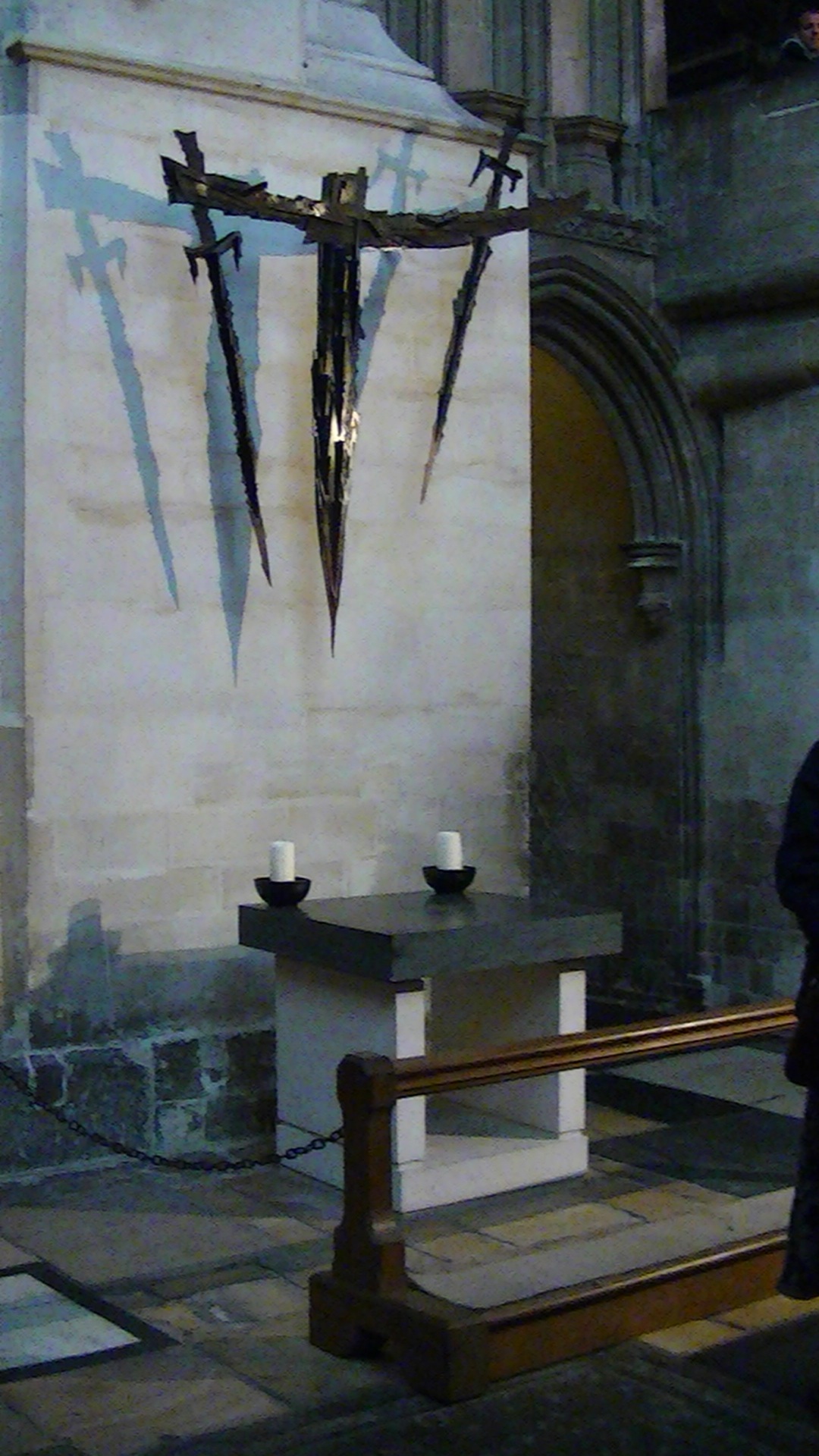
“The bell for vespers began to sound, and the archbishop, with his cross borne in front of him, made his way as usual into the cathedral. Hardly had he reached the ascent to the choir than the noise of armed men and the shout of the knights announced that the pursuers were at hand. “Where is the archbishop, where is the traitor!” resounded through the hollow aisles, mingling strangely with the recitation of the psalms in the choir. Becket, hearing this, turned back a few steps, and calmly awaited their approach in the corner of the northern transept before a little altar of St. Benedict. “Here,” he cried, “is the archbishop, no traitor, but a priest of God.” All the clergy present abandoned Becket and fled the cathedral. Only the young clerk from Cambridge, Edward Grim, stayed with him.
The knights surrounded him. “Absolve,” they shouted, “and restore to communion those you have excommunicated and restore their powers to those whom you have suspended.” He answered, “I will not absolve them.”
“With rapid motion they laid sacrilegious hands on him, handling and dragging roughly outside the walls of the church so that there they would slay him or carry him from there as a prisoner, as they later confessed.” Becket struck the incendiary spark. He pushed against the most aggressive of the knights, Sir Reginald FitzUrse, calling him a pimp or panderer, and chiding him saying, “Don’t touch me Rainaldus, you who owe me faith and obedience, you who foolishly follow your accomplices.” The rebuff was too much for an enraged FitzUrse. He swung his sword at Becket, but only knocked off his skullcap. Sir William de Tracy struck next, cutting off the top of Becket’s head, and with the same blow cutting deeply into the arm of young Edward Grim, who was holding Becket protectively. Becket received a second blow on the head from FitzUrse and fell to the stone floor. Then the third knight, Sit Richard de Brito (or Sir Richard de Breton) “inflicted a grave wound on the fallen one, with this blow he shattered the sword on the stone and his crown, which was large, separated from his head so that the blood turned white from the brain yet no less did the brain turned red from the blood; it purpled the appearance of the church with the colours of the lily and the rose, the colours of the Virgin and the Mother and the life and death of the confessor and martyr…” Sir Richard de Brito cried, “Take that, for the love of my lord William, the King’s brother!” when he delivered the fatal blow. William FitzEmpress, the count of Anjou, was Henry’s youngest brother. It was believed by William’s friends that he died of a broken heart after Thomas Becket refused to allow his marriage to Isabel de Warenne, Countess of Survey. 
The fourth knight, Sir Hugh de Morville, drove away onlookers who were gathering so the other knights could finish off Becket. The fifth man, Hugh de Horesa, a Canterbury monk, “placed his foot on the neck of the holy priest and precious martyr and, horrible to say, scattered his brains and blood over the floor, exclaiming to the rest, “Let us away, knights; he will rise no more.”
Becket’s body lay on the floor for several hours. Sometime before midnight, Gilbert, the chamberlain, entered the church and tore off a strip of his surplice to cover Becket’s mutilated head. The monks collected the scattered brains and placed the body on a bier in front of the high altar. They also cordoned off the area to block a growing crowd of onlookers, who were tearing off pieces of their garments and dipping them in Becket’s blood.
Cures and Pilgrims
Miracles attributed to Becket’s blood began almost immediately. On the night of the murder, one man took home a piece of bloody cloth to his sick wife who was instantly cured. Reports of similar cures followed in the next few days, mostly involving poor and sick local women.
In the following months, as people came to the cathedral to offer thanks, two monks wrote down the reports of cures. They were Benedict of Peterborough and William of Canterbury. Each man took a different approach. Benedict recorded many cases of poor women, widows and the sick, most of whom lived in the area. William began writing in 1172, when the shrine was becoming fashionable, and focused on wealthy and powerful men. He grouped miracles into types (healing, driving out demons, finding lost items) and the stories became increasingly fantastic. He claimed a Breton woman taught a starling to invoke St. Thomas, and when a kite seized the bird it repeated this phrase and the kite dropped dead, releasing the starling.
The Fate of the Knights
King Henry II did not punish the knights for the murder. He advised them to flee to Scotland. After a short stay, they went to Sir Hugh de Morville’s castle of Knaresborough in Yorkshire. All four were excommunicated by Pope Alexander III on Holy Thursday, March 25, 1171–three months after Becket’s murder.
The knights traveled to Rome and sought an audience with Pope Alexander, who despite their penitence, declared they should be exiled and fight in Jerusalem “in knightly arms in The Temple for 14 years.” After their service was completed, the pope instructed them to visit the holy places barefoot and in hair shirts and live alone for the rest of their lives on the Black Mountain near Antioch, spending their time in vigil, prayer and lamentation. The pope meted out a pretty harsh punishment to the four knights, considering they all had expressed contrition and made amends through various donations and endowments in Becket’s name. No one seems to know exactly what happened to the knights. According to one account, they went to Jerusalem and never returned. They were buried under the portico in the front of the Knights Templar Round Church built on the Temple of Solomon.
In other accounts, Sir Reginald FitzUrse fled to Ireland, where he fathered the McMahon clan. Sir William de Tracy died of leprosy in Italy on the way to the Holy Land. Sir Richard de Brito may have gone to the island of Jersey. Horsea the Evil Clerk disappears from history. Sir Hugh de Morville’s story has two possible endings. He went on pilgrimage to Jerusalem and died in 1173. In 1174 his lands passed to his sister, Maud. He was owner of Pendragon Castle, which according to legend, was built by Uther Pendragon, father of King Arthur. A Hugh de Morville also appears in the service of King Richard I, or Richard the Lionheart as a crusader. De Morville was named the king’s hostage in 1194 when King Richard had been captured by Leopold V, Duke of Austria. This Hugh de Morville provided an Anglo-Norman poem to lay priest and author Ulrich von Zatzikhoven for his romance, Lazelet. Nothing more is heard of de Morville. His sword was said to have passed to Carlisle Cathedral and was displayed for hundreds of years as The Becket Sword. The sword disappeared during the Reformation. Ironically, it was the only sword not used on Becket.
Becket 2020
Canterbury Cathedral will be celebrating the 850 years of Becket’s martyrdom in 2020. They have a special section o on their website – Becket 2020 – detailing events, resources, partner institutions and branding requirements. Becket’s bloody vestments will undoubtedly be the most popular attraction. 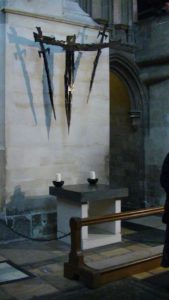
2019 and 2020 will see continuing stories in Great Britain and elsewhere on cardinals and bishops who protected sexually abusive priests and “criminous clerks” (to use King Henry’s phrase); or indulged in sinful and criminal behavior themselves with few or no consequences. 800 years ago, King Henry attempted to try clerics charged with serious crimes in civil courts but failed. The cultural and political power of the Catholic Church was too strong.
The ethic of clerical immunity has remained in the institutional Church to this day; but their most potent weapons of excommunication and ban of the sacraments have no impact on today’s public prosecutors, appointed or elected officials. The Catholic Church is not the church of Christendom anymore and has lost much of its moral authority in Europe, as well as the Americas–home to most of the world’s Catholics. The Benefit of Clergy culture has brought the global church to such a crisis ta the pope has had to intervene to save it.
On February 21-24, 2019 Pope Francis will be convening a meeting at the Vatican of the heads of all the bishops’ conferences around the world to discuss the clerical sex abuse scandals and the importance of child protection. One of the action plans will be on the process of turning over bishops and clergy to secular authorities when they have been credibly abuse of abuse, or hindering investigations of abuse. Cardinal Blase J. Cupich of Chicago, one of the meeting’s organizers observed: “Pope Francis is calling for radical reform in the life of the Church, for he understands that this crisis is about the abuse of power and a culture of protection and privilege, which has created a climate of secrecy without accountability for misdeeds,” he said, adding that “all of that has to end.”
I wonder what the martyred Archbishop Becket would have to say about that? 

“Relations between (Cardinal) Cushing and (Bishop) Wright were not always smooth. When Cushing was told Wright had his eye on the episcopal throne Cushing growled, “He may have his eye on it, but I’ve got my ass on it..” And Wright suffered from another major liability; among insiders he was believed to be a homosexual, a trait tolerated in cosmopolitan Rome, but a severe handicap in puritanical Boston.” Anthony Lukas, Common Ground.
“Here it is worth revisiting the career of Cardinal John J. Wright (1909-1979) who, like (Cardinal Theodore) McCarrick, was the subject of numerous stories about his own sexuality. Again, these came mostly from former seminarians and priests of the Pittsburgh (PA) diocese, which had a reputation during Wright’s decade there as a haven for actively gay clerics. That was especially true of the Pittsburgh Oratory, which Wright founded in 1961 as a religious center ministering to Catholic students attending the city’s secular universities.” Kenneth L. Woodward, “Double Lives-The Peril of Clerical Hypocrisy” Commonweal
The life and career of John Cardinal Wright is a perfect example of how a sexually active homosexual priest or bishop can rise to the top and stay there: an entrenched protective brotherhood (much like police departments) and a tacit understanding that whistle-blowing is a career killer.
This protective ethic applies to heterosexual bishops/cardinals, too: the Chicago Sun-Times detailed financial and other scandals associated with John Patrick Cardinal Cody of Chicago (1965-1982). A contemporary of Cardinal Wright, Cody was alleged to have a mistress, a step-cousin he grew up with, Mrs. Helen Dolan Wilson. Over a million dollars went missing from the Chicago Archdiocese from accounts Cardinal Cody controlled; and four million in a single year when he was treasurer of the U.S. Conference of Catholic Bishops. A chunk of money is believed to have been diverted to Helen Dolan Wilson for furs, a house in Boca Raton, Florida, a luxury car, expensive clothes, holiday cash presents and loans to her children. When Cody died the investigations were dropped.
John Cardinal Wright was a controversial figure because of his strong espousal of social justice causes such as the civil rights movement and opposition to the Vietnam war; and his steely resistance to other causes, including married priests, the ordination of women, and birth control. He felt being a “social liberal” was entirely compatible with being a “theological conservative.” 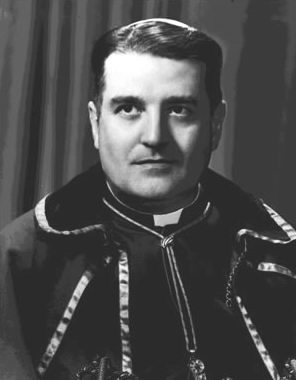
As a child, he became a Francophile after hearing World War I soldiers talk about France, and he began a collection of books about Joan of Arc that eventually ran to 6,000 volumes. He memorized French folk songs and poetry and became enamored of Debussy’s music. Because of his intellectual background, Cardinal Wright always felt himself to be apart from the American tradition. “I joined the body of bishops but went my own way,” he once said. “For instance, I never went to funerals or played golf. I’m still a little bit of a maverick.”
In 1950, at the age of 43, Wright became the first bishop of a new diocese in Worcester, Massachusetts. Prior to his appointment he had been an Auxiliary Bishop of Boston. His clerical career climb had started, and so did the sillage from his episcopal sex life.
On March 30, 2005, a lawsuit was filed against the Dioceses of Springfield and Worcester, MA by William E. Burnett, 64, accusing five priests and two bishops, all deceased, of sexual abuse. The abuse took place from 1950-1959. According to Burnett, his abuse by Bishop Wright occurred mainly between 1952-1955, when he was 11 or 12 to his early teens. The sexual encounters took place at a private lakeside retreat owned by Burnett’s uncle, Monsignor Raymond Page, who served as a priest under Bishop Wright in Worcester. In her 1,318-page tome, The Rite of Sodomy – Homosexuality and the Roman Catholic Church, Randy Engels details the sexual threesomes in the chapter, “The Secret Life of Bishop John Wright.”
“Burnett stated that the abuse ritual began with drinks, a coke for him and coke and alcohol for Page and Wright. Wright would then undress him, fall on his knees before the standing boy and cover him with kisses–feet, penis, nipples and lips. He and Page would then undress and while the later stimulated Wright from behind, Bill would fellate the bishop. When Wright neared ejaculation, he would turn Bill around and sodomize him. Then Page took his turn raping his nephew. On another occasion, Burnett said, Bishop Wright and Page engaged in simultaneous oral copulation. While Bill looked on, he was told to begin masturbating. Then Wright turned to Bill and said he wanted to “drink me in.” Wright then fellated him to orgasm. Bill said he never forgot those words. Burnett said Bishop Wright encouraged him to study for the priesthood for the Diocese of Worcester when he graduated from high school.”
Bill Burnett was described as a “schoolteacher turned bank robber” in a July 16, 1991 article in the Houston Chronicle. He was sentenced to life in prison for murdering Kenneth Gardner, a retired businessman, in a Houston motel on September 23, 1989. Burnett was 48 at the time of the murder and living in Texas. He had already served time in federal prisons for seven bank robberies. During some of those robberies he pistol-whipped or sexually molested women tellers.
Burnett passed two polygraph tests on his allegations. The Diocese of Worcester said it had been made aware of Burnett’s claims “several years ago and had investigated the claims with members of his family and by a thorough investigation of diocesan records.” Family members cast doubt on Burnett’s story, and the Diocese could not find anything to deem it credible. The Springfield Diocese said nothing in its records corroborated the allegations.
Bishop Wright arrived as the new bishop of Pittsburgh in 1959. He was closely involved with cutting-edge social and religious issues of the day. He encouraged his priests to be active in promoting civil rights for African-Americans. He advised President John F. Kennedy on ecumenical issues and relationships. During the Second Vatican Council Bishop Wright strongly supported the statement on religious liberty, Dignitatis Humanae, which was seen by many as a departure from Church tradition. He also urged the Church to take a clear stand against racism and for ecumenical dialogue. 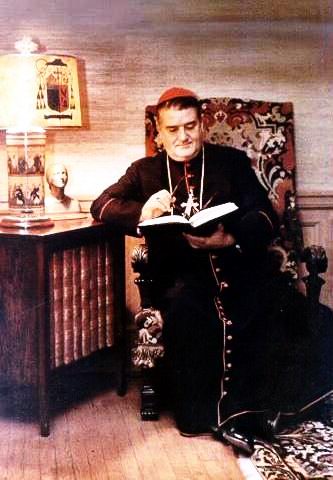
In 1962 Bishop Wright released a joint statement with Episcopalian Bishop Austin Pardue condemning the U.S. Supreme Court’s decision in Engel v. Vitale to eliminate prayer in public schools. “A powerful, aggressive spirit of secularism is abroad in our land,” they wrote. “It filters through all levels of society for the purpose of eliminating God from our national life.” The specter of secularism would be raised again decades later by conservative bishops in Catholic culture wars in the United States and Europe.
Many observers of the U.S. episcopal scene expected Bishop Wright to succeed Richard Cardinal Cushing as Archbishop of Boston, who was due to retire on his 75th birthday. Instead, in May 1969, Pope Paul VI appointed Wright as prefect of the Congregation for the Clergy and named him a cardinal. Kenneth L. Woodward, the former religious editor for Newsweek (1964-2002), reflected on the appointment in his October 26, 2018 article in Commonweal, “Double Lives – The Peril of Clerical Hypocrisy.”
“In 1969, at the age of 60, Pope Paul VI chose Wright to head the Congregation for Clergy in Rome and elevated him to cardinal. It was there, in the frenzied initial years of the post-council era, that I first heard stories of his leading a double life rather openly with a younger lover. What interests me now is not the private details of this double life, but whether it influenced how he ran the congregation overseeing the selection, training, and formation of the clergy.” 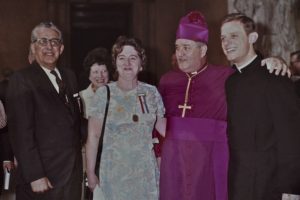
Wright enjoyed the trappings of his post in the Vatican. He shared his fifth-floor apartment with his secretary, the Rev. Donald Wuerl, who he brought with him from Pittsburgh. The apartment was said to be crammed with stereo equipment and many books. Cardinal Wright enjoyed long conversations over a large dinner of pasta and said he “confessed to Romanitis.”
One of the first things he did at the Vatican was to suggest that all priests renew their vows of celibacy and ecclesiastical obedience each year. On February 9, 1970, the Congregation for the Clergy issued a circular letter on priestly renewal that said: “It is desirable that every priest should make an act of renewal on Holy Thursday morning.” This act of renewal, it stated, “should be a reaffirmation of the act by which he consecrated himself to Christ and has undertaken to fulfill the obligations of his priesthood, particularly celibacy and of obedience to his Bishop or religious superior.” Few priests or bishops responded to his request. The Mass at St. Patrick’s Cathedral in New York was attended by only 35 of about 1,200 priests who had been invited. The meager response was regarded as an embarrassment to the Vatican. Numerous other dioceses in the U.S. and Europe ignored the request, not wanting to stir up controversy in the face of mounting criticism of mandatory celibacy. The Rev. Charles Curran, a theologian at Catholic University in Washington, D.C., was quoted as saying, “Why is it that when they want to test us, it’s always about celibacy and obedience – never on anything basic like faith, hope and charity.”
The Fr. Ginder sex scandal broke at the end of Bishop Wright’s watch in Pittsburgh. A native of Pittsburgh, Fr. Charles R. Ginder had been a priest of the diocese since his ordination in 1940. According to his semi-autobiographical novel, Binding with Briars – Sex and Sin in the Catholic Church, his homosexual activities began in 1949. From the late 1940s to the mid-1960s, Fr. Ginder was a popular syndicated columnist and writer. He contributed a weekly column, “Right or Wrong” to Our Sunday Visitor, a weekly Catholic publication with over a million subscribers. He also served for several years as the dioceses’s Censor Librorum. 
In 1969 police officers raided Fr. Ginder’s apartment in the Squirrel Hill district of Pittsburgh, and found photographs of teenage boys performing sex acts with each other, Fr. Ginder, and other men, possibly other priests from the diocese. They also took Fr. Ginder’s diaries, which chronicled his sexual encounters. Diocesan attorneys interceded for Fr. Ginder and he was released from jail and put on ten-years probation.
Fr. Ginder’s name pops up on BishopAccountability.org, a website that logs clerical sex abuse charges and convictions; and in the August 14, 2018 Pennsylvania Grand Jury Report on clerical sexual abuse and cover up in all the state’s dioceses. Of the 301 credibly accused priests in the report, the highest number, 99, were from the Diocese of Pittsburgh. The resulting public firestorm was to bring down Cardinal Donald Wuerl–Cardinal Wright’s secretary, protege and a former bishop of Pittsburgh–two months after the report’s release.
After a long illness, John Cardinal Wright died on August 10, 1979. He was 70 years old. At the time of his death, he was the highest ranking American prelate in the Vatican. His funeral Mass, at Holy Name Church in the West Roxbury section of Boston, was attended by 11 cardinals, countless bishops, priests, dignitaries, government leaders and friends. Archbishop Jean Jadot, Apostolic Delegate to the United States, was one of several concelebrants. The principal celebrant was Humberto Cardinal Medeiros, the Archbishop of Boston, who returned from a trip to Ireland for the funeral. John A. Volpe, former Governor of Massachusetts and Ambassador to Italy, read one of the epistles at the service.
Bishop Vincent M. Leonard of Pittsburgh, eulogist at the funeral, emphasized Cardinal Wright’s scholarship and love of teaching. “Every opportunity to teach he accepted,” Bishop Leonard said. “And when his legs could no longer carry him to the podium, pulpit or altar, we has satisfied to use a pen and rely on the mails and printed word.” He went on to describe Cardinal Wright as a “great priest in the biblical sense of the word, a devoted shepherd of the flock committed to him in Worcester and Pittsburgh and a loyal and obedient son of Holy Mother Church. His death is a great loss to church and community.” Pope John Paul II sent a message praising Wright for “loyal service to the church and fidelity to the See of Peter.” The pope said, “He will long be remembered with admiration and gratitude.”
Cardinal Wright has been buried almost 40 years, but his lifestyle as a closeted, sexually active prelate still exists and causes problems today. Here’s why:
Blackmail – Pederast priests, or priests who seduce, pressure or have sex with teenagers, students, young adults and others take their cue from the example set at the top. If a priest had sex with the bishop, or knows about priests, seminarians, youngsters or rent boys the bishop has used for sex, he can be confident the bishop won’t crack down on him when gossip about his sex life makes the rounds. In addition, illicit sex opens the cleric up to blackmail by criminals, tricks, past lovers and others.
Hypocrisy – How can a cardinal or bishop preach celibacy and chastity but also engage in sexual activity? Obviously, they have worked it out in their own minds that it’s OK for them to have sex. However, the laity–especially gay and lesbian Catholics– must stay within the boundaries of Catholic conventional morality. This hypocrisy destroys their credibility, the credibility of their teaching and office, and negatively impacts the authority and perception of bishops as a group.
Stupidity – Rather than complain about the large numbers of homosexuals in the priesthood, why not change it and permit women deacons and ordain married men? In his position in the Congregation for the Clergy, Cardinal Wright knew how many priests left to marry–hundreds of thousands of them. Enforced celibacy is the reason many men do not pursue a vocation. Continuing with a limited pool of candidates for the priesthood will draw what they fear most: immature, fearful homosexuals who secretly pursue their desires.
Delusional – In this age of cellphone cameras and text message trails, digital news and opinion, aggressive public prosecutors, angry and skeptical coreligionists, and editors and publishers who won’t be cowed—nobody is getting away with anything. To think a secret life is safe is delusional.
Modern day Cardinal Wrights should not be giving themselves special dispensations to indulge in homosexual sex that they heartily condemn in others. Liberal or conservative, we need to drag them out in the open. The trouble is..will there be enough left to run things?

Amid the summer’s disgusting and disheartening clergy sexual abuse revelations comes a new twist–an 11-page “testimony” by former Papal Nuncio Archbishop Carlo Maria Vigano, 76. This August 25, 2018 letter, predictably, was published on LifeSiteNews.com. This faithful Catholic media site is a twin of the National Enquirer, a supermarket tabloid known for its titillating sex items and outrageous claims.
Archbishop Vigano’s letter is full of gossip and veiled sex stories. It names names, but curiously many of the ones he targeted are not conservative bishops or cardinals–just liberal and moderate ones, and Archbishop Vigano’s rivals and political enemies in the Vatican bureaucracy and diplomatic service.
Vigano’s testimony has three problem areas; four if you count all the stilettos out for him now.
- Most of the actions he described happened during the papacies of St. John Paul II the Great and Pope Benedict XVI. They will both be slimed in any investigation. If this story snowballs, Pope Benedict will be pressed to discuss Archbishop McCarrick and other sex offenders during his reign and that of his predecessor. That will be a stinker exclamation mark to his papacy.
- The basis for Archbishop Vigano’s call for Pope Francis to resign is his claim Pope Benedict “secretly sanctioned” Cardinal McCarrick for his immoral behavior and Pope Francis looked the other way. He let McCarrick travel, be admired, and have all kinds of influence in appointing U.S. bishops, much to Vigano’s fury. Vigano said that Pope Benedict disciplined Cardinal McCarrick in 2009 or 2010–he wasn’t sure which year since no Vatican official responded to his memos. There are a lot of gaps in his story, including why Pope Benedict said nothing in the remaining four years of his papacy while Cardinal McCarrick continued his public ministry and high profile.
- Archbishop Vigano claims that his motive in all of this is to “stop the suffering of the victims, to prevent new victims and to protect the Church: only the truth can make her free.”
Is that true? Really?
In 2014, Vigano, as papal nuncio to the United States, ordered officials of the Archdiocese of St. Paul and Minneapolis to end an investigation into sexual misconduct on the part of Archbishop John Nienstedt even after two auxiliary bishops explained that the investigation was far from complete. He also ordered those bishops to destroy a letter they sent to him on the investigation. The bishops objected and told him “this would rightfully be seen as a cover-up.” The document Vigano asked them to destroy explored allegations that Archbishop Nienstedt engaged in sexual misconduct with adult males, including seminarians.
Why would Archbishop Vigano be incensed about Archbishop McCarrick but not about Archbishop Nienstedt?
In contrast to McCarrick, Archbishop Nienstedt is a very conservative bishop who actively opposed gay marriage in his state and admitting gay men to the priesthood. Nienstedt protected a predator priest, Fr. Curtis Wehmeyer, whose 2010 sexual abuse of three minors sparked criminal charges and civil petitions against the archdiocese. Fr. Wehmeyer was a regular at gay cruising areas in local parks. He also enjoyed a social relationship with Archbishop Nienstedt.
In an August 27, 2018 interview with Slate.com, an online magazine that covers current affairs, politics and culture, Dr. Massimo Faggioli, a professor of theology and religious studies at Villanova University and a contributor to Commonweal magazine offered this assessment:
“Vigano is just using the Western church, and American Catholicism, and the shock caused by the revelations against Cardinal McCarrick, to make his own personal case against the Vatican, which expelled him and didn’t make him a cardinal. That is a very cynical operation, because Vigano has no interest in the American church. The American church is in big trouble, because we don’t know how it will survive when many of the bishops are hated by many Catholics. We don’t know what kind of church this will be.”
“But remember, in 2011 (Vatican Leaks Scandal), Vigano tried to smear people in the church with accusations that were unfounded. He was working in the institution that oversaw the governance of the Vatican city-state, and when he was told he was not going to become president of the institution, and therefore not a cardinal, and be sent away from the Vatican, he became disgruntled and angry at the second in command, Cardinal Bertone, the right hand of Pope Benedict, and made other accusations against people working in the office he was in, and said they were guilty of conflicts of interests and so on. There was an investigation, and they found nothing that was credible. But that never stopped them from sending him to Washington, DC. So what he published 24 hours ago is not the first time he has done this kind of thing. This time he went for a big target, Pope Francis, even though his real enemies are Pope Benedict’s people.”
“I think Vigano represents the part of the right wing of the church that sees the LGBT issue as the defining issue of this millennium, or this century, and this pontificate. They think that anything can and should be done to stop Pope Francis from ushering in a more welcoming church for LGBT people. So in this there is a convergence between Vigano, who has always been obsessed with the gay lobby and gay conspiracy, and the American Catholic right.”
Hell hath no fury…….
Conservative Catholic publications and bloggers love gay marriage and romance stories. They are fascinated and obsessed by them. They are reported with relish, in gleeful, triumphant detail, especially when a Catholic school teacher or long-time parish volunteer loses his or her position after marrying their partner.
Conservative Catholic morality watchdogs have been all over Fr. James Martin’s book, Building a Bridge: How the Catholic Church and the LGBT Community Can Enter Into a Relationship of Respect, Compassion and Sensitivity.” The often anonymous complainers about the book and Fr. Martin’s speaking appearances protest his lack of condemnation for homosexual relationships, and that he does not use the term “intrinsically morally evil” to describe them.
It’s curious, given their obsession with gay and lesbian sex, that no conservative Catholic publications have covered the story on Sodalitium Christianae Vitae beyond one or two mentions. There has been no accompanying editorial on “homosexual agendas,” or “homosexual networks” out to undermine traditional Catholic moral teaching. An extensive web search could not produce one conservative Catholic blogger who posted about it. There is a curious silence from the ranks of the ultra conservatives and self-described “orthodox” defenders of faith and “truth.” Why is that?
Here’s a simple answer: conservative Catholics don’t condemn one of their own. Luis Fernando Figari was exposed as a closeted homosexual who is also a liar, hypocrite, molester and rapist. But he didn’t try to change church teaching; he just went around it. He’s a sinner, not a subversive. 
The Sodalitium Christianae Vitae, or Sodalitium of Christian Life as it’s known in the U.S., was established in Lima, Peru in 1971 by Luis Fernando Figari, a law student. Sodalitium was set up to inculcate teenage and young men from the Peruvian elite with a conservative strain of Catholicism, shaping them to champion these values as adults. In 1997 Pope John Paul II approved it as a lay society of Apostolic Life of Pontifical Right, under the supervision of the Congregation for Institutes of Consecrated Life and Societies of Apostolic Life.
By 2010 abuse allegations began to seep out. In May 2011 a man filed a complaint with Peru’s ecclesiastical court that was forwarded to the Vatican. More complaints were filed in 2013 and 2014. But it wasn’t until 2015 that the lid blew off Sodalitium’s secrets with the publication of a book, Half Monks, Half Soldiers, by Pao Ugaz and Pedro Salinas. The journalists chronicled years of sexual, physical and psychological abuse by Figari and other leaders in the community, including Figari’s #2, German Doig Klinge, the former Sodalitium vicar general who died in 2001. Presumably German Doig’s cause for canonization–promoted by Figari and Sodalitium–will now die a quiet death.
When Peruvian prosecutors began investigating the abuse allegations in 2015, Figari left for the Vatican.
Both the Vatican and Sodalitium have commissioned their own investigations. The 2016 Sodalitium report says Figari and other members sexually abused at least 19 minors and 17 adults starting in 1975. A former member said when he was 15 Figari had anal sex with him several times. The report also said he instructed a man to kiss his penis, and touched and hugged members while naked. Figari also knew of three adult members who sexually abused minors. 
How could this go on for so long? No one in the organization reported the abuse, or apparently, tried to stop it. The shepherds looked the other way and ignored complaints. They include the last two popes, St. John Paul II and Benedict XVI, Vatican bureaucrats, and bishops who agree with the mission of conservative groups like the Legionnaires of Christ and Sodalitium uber alles. It might also include some members of the closeted “Lavender Mafia” in the Vatican who protect their own. 
Cardinal Juan Luis Cipriani Thorne, the ultra conservative archbishop of Lima and a member of Opus Dei, had an ambiguous response to the scandal. He ignored it until commenting became unavoidable. But he also gave a warning in a homily that he would not accept criticism from “false moralists who want to mistreat the Church.”
Cardinal Cipriani wasn’t so discreet in 2013, when he outed a Peruvian legislator, Carlos Bruce, on a radio program. The reason for his fury: Bruce had sponsored a bill to allow same-sex couples to enter into civil unions. ‘If a person has made some alternate choices, that’s their problem and he can do whatever he wants on his own. But I don’t think that we’ve elected congresspeople just so they can justify their own life choices. I don’t think that’s right.” Bruce, who is divorced with two sons, later told news media that he would not dignify such comments with a response. The cardinal’s comments resulted in Peruvian tabloid La Razon to run the headline “Cipriani pulls Bruce out of the closet” on its front page.
As far as I can tell, Cardinal Cipriani never went on TV, radio or print media, or used one of his homilies to denounce Luis Fernando Figari and the “saintly” German Doig for using their leadership positions to procure and sexually assault teenage boys and young men.
Although the Sodalitium sex abuse scandal did not come up in any of the Pope’s public speeches or audiences during his January 15-21 2018 trip to Peru and Chile, it shadowed his entire stay. On January 10, 2018, shortly before traveling, Pope Francis essentially took over Sodalitium by appointing Columbia Bishop Noel Antonio Londono Buitrago as papal commissioner. In addition to sex abuse, Vatican investigators also uncovered financial irregularities.
On the January 21, 2018 return flight to Rome from Lima, Pope Francis said that Figari’s case is currently before the court of appeals in the Apostolic Signatura, and “will be released in less than a month.” “I am not very informed, but the thing is not very favorable for the founder,” he added. “If the Apostolic Signatura decides in favor of the appeal, it will not make sense,” he said, “because many, many serious cases are accumulating.”
What will happen to Figari? Will the Vatican allow him to be extradited to Peru to be arrested and face trial; or will it permit him to retire to a “life of prayer and penance” like the disgraced Legionnaires of Christ founder and leader, Fr. Marcial Maciel Degollado?
I’m sure Cardinal Cipriani would not want the publicity and investigative reporting that would accompany Figari’s return to Lima. He will fight tooth and nail to keep him in Rome. 
U.S. Archbishop Charles Chaput of Philadephia, who invited Sodalitium representatives to staff campus and parish ministries, would find it awkward to defend their leadership while castigating moderate and liberal Catholic politicians for defending gay and lesbian civil rights.
The less said, the better. 
Pope Francis, who inherited this mess, and whose foot-dragging has caused complaint, does get a partial defense from Pao Ugaz, the investigative journalist and co-author of Half Monks, Half Soldiers.
“The Vatican is set up so that the pope reigns but doesn’t govern,” she said. “Francisco is much more political (than previous pontiffs) and he has more leverage but there is still a lot of resistance and it remains to be seen who will prevail.”
On December 20, 2017, Bernard Cardinal Law passed away at the age of 86. For the last 13 years he lived in Rome, a voluntary exile from the United States. He will be buried in Rome as well.
Law was appointed Archbishop of Boston in 1984, and he stepped down on December 13, 2002 after being engulfed and overwhelmed by the sex abuse scandal he helped to create.
Although Thomas O’Connor, Boston College historian, remarked “There’s going to be a lot of good interred with his bones,” the more likely epitaph will be that penned by Kevin Cullen of The Boston Globe: “Bernie Law … one of the greatest enablers of sexual abuse in the history of the world.”
Bishop Christopher Coyne of Burlington, VT, who served as Law’s spokesman during the period before the cardinal’s resignation, said in a statement on his death that like each one of us, Law’s days had their fair share of “light and shadows.” “While I knew him to be a man of faith, a kind man and good friend, I respect that some will feel otherwise, and so I especially ask them to join me in prayer and work for the healing and renewal of our Church,” he said.
Sean Cardinal O’Malley, archbishop of Boston and Law’s immediate successor, also published a statement on December 20th, offering his sincere apologies to anyone who experienced the trauma of sexual abuse by clergy. “As Archbishop of Boston, Cardinal Law served at a time when the Church failed seriously in its responsibilities to provide pastoral care for her people, and with tragic outcomes failed to care for the children of our parish communities. I deeply regret that reality and its consequences.”
But O’Malley also noted that Cardinal Law’s “pastoral legacy has many other dimensions,” including his early commitment to the civil rights struggle in Mississippi, and his work with the ecumenical and interfaith movement following Vatican II. He was well known for his ministry to the sick, dying and bereaved.
Journalist Mike Barnicle wrote about Cardinal Law in a NY Daily News column published on Sunday, December 15, 2002 — two days after his resignation. The headline was “The tragedy of Law’s fall from grace.” I clipped out the article from the paper to keep; to remind me of the good and evil one person can do, our complexities of character and motivation, and the nightmare forms our justifications can sometimes become.
The article began – “There was a night in December almost exactly four years ago when the door to the hospital room opened and Bernard Cardinal Law walked in to visit a sick man lying in the bed. The priest barely knew the guy, just dropped by to talk for a few minutes, offer a simple blessing and then he was gone, like a doctor on his rounds.
The guy was surprised. He hadn’t really known the cardinal and thought of him as a rather aloof, somewhat cold figure. But Law was accompanied that evening by some warmth, a sense of humor and a capacity for conversation.
“He comes here a lot,” one of the nurses said. “Just shows up. Him and his driver. A lot of the time, late at night. He’s great with the homeless, the drunks, street people who hang around the emergency room to get out of the cold.”
How does a man who was arguably the single most important member of the Catholic hierarchy in America, a guy who made his bones working for civil rights in the South during the violent ’60s, a priest who began his career speaking for the poor, slowly but surely tumble into such scandal that his life is now littered with subpoenas rather than psalms? Is it arrogance? Isolation? The sin of pride? Blind ambition? 
Last week, days before Law sat down with the Pope and resigned as leader of the Boston Archdiocese, whatever future he may have had within the church was mortally wounded by the artillery of conscience. The volleys came in the form of 58 of his own priests who signed a letter urging him to step down and get out of town. It was more powerful than any editorial clamoring for his resignation. Now, control and contain–the creed of corporate Catholicism in America–is reeling. The faithful are taking back the store.
Still, it is astounding to consider what has happened and what might happen yet.
Law, Rockville Centre, L. I., Bishop William Murphy, Brooklyn Bishop Thomas Daily and many other men who spent most of their lives spreading a gospel of truth and morality actively engaged in a decades-long coverup of priests who preyed on the helpless and the young and then paid out millions in hush money. They have made it possible for every Catholic bashing bigot in the country to find both a voice and an audience. They have made it nearly impossible for parents to lecture their children on the need to attend Mass, go to confession, pay attention to a homily.
In Boston, the cardinal was like a fugitive, running from the secular law, barely able to appear at a cathedral without attracting angry protesters, fleeing his home for Rome to meet with other old men who seem to want to blame this scandal on American culture.
In New York, Edward Cardinal Egan is practically invisible and mute, his voice silenced by the burden of his own bureaucratic mistakes. What went wrong with these guys? Did they ever listen to the late Joseph Cardinal Bernardin of Chicago, who spoke out about the problem of child-molesting priests nearly 20 years ago?
Law did an awful lot of good in his life. His tragedy, though, is that when it mattered most, he lied. He lied to his strongest supporters, lay people, who urged him to come clean with every problem priest still on the books. He lied to the people in his diocese when he repeatedly across the years told them that his priest had been removed or that priest would not be allowed to work around children. He lied to other pastors around the country when he would write letters that read like great college recommendations on behalf of men he knew to be sodomists of the young and vulnerable. Maybe he was lying to himself, too.
Now, in the wake of his departure, he leaves the Catholic Church in this country looking like a religious version of the San Andreas fault. The fissure between the faithful and the hierarchy–the Pope in Rome and a whole lot of bishops here–is obvious. The shadowy outline of a separate and distinct American Catholic Church is no longer impossible to see. There will be people in parish after parish seeking equal time after each sermon they hear that they feel is foolish and delivered by some remote priest, automatically obedient to an authority that has been compromised and shamed by scandal that could have been avoided if just one man in a red hat had realized there is a huge difference between human weakness–a mistake–and a felony.
Law is history now, in more ways than one. He has been weakened, battered, defeated and made old by his own blindness and inaction.
He looks and behaves a lot differently today than he did that long ago night in December 1998 when he was full of humor, even humility, and took the time to bless a sick man in a hospital bed. I remember him well from that evening because I was the guy he took the time to bless.”
Bishop Robert Morlino was appointed by Pope John Paul II as the 4th bishop of Madison, Wisconsin on May 23, 2003. The “good news” for Madison Catholics is that he turns 75 on December 31, 2021. They just need to hang on and run out the clock.
On October 21, 2017, his vicar general, Rev. Msgr. James Bartylla, emailed diocesan priests on “Consideration of Funeral Rites for a Person in a Homosexual Civil or Notorious Union.” Though it was sent from the vicar general, the communication had the approval of Bishop Morlino. 
Priests should not mention the name of the surviving partner, nor make any reference to the “unnatural union” if funeral rites are provided for someone in a same-sex relationship. In addition, priests should keep in mind the “attitude” of the family toward the church, whether the deceased or surviving partner was a “promoter of the gay lifestyle,” and whether the deceased person had shown “signs of repentance before death.”
Predictably, this has caused a stink. Even a few bishops weighed in on the opposite direction–something that rarely occurs in their “collegiality” culture.
Bishop Morlino and Msgr. Bartylla have not extended the funeral ban to any other sexual activity the church finds sinful or shameful–rape, incest, adultery, pornography, prostitution, molestation–by clergy or laity to children, young people or adults. The only ban is to lesbians and gays in a civil marriage.
In this 13 years as bishop of Madison, Morlino has regularly detonated controversy bombs. 
In 2004, six months after arriving in Madison, he came out swinging in the Catholic Herald newspaper. Morlino stated that Madison existed below a “moral minimum” and that they city had “virtually no public morality.” He specifically cited the city’s StageQ community theater–a lesbian and gay troupe–as evidence of this view.
But the worst episode was his reaction to a March 2010 New York Times expose of the Vatican handling of the Rev. Lawrence C. Murphy. Father Murphy is believed to have molested hundreds of boys between 1950 and 1974 while assigned to a Milwaukee area school for the deaf. In the late ’90s, the Congregation for the Doctrine of the Faith, a Vatican office headed by then-Cardinal Joseph Ratzinger–the future Pope Benedict XVI–stopped attempts by Milwaukee Archbishop Rembert Weakland and Cardinal Bertone of the CDF to defrock the priest.
Bishop Morlino, who ripped Madison’s lack of “public morality” rushed to the defense of Pope Benedict XVI’s management of the Fr. Murphy sex abuse complaint–
“As the Church in Europe now uncovers some of the sins committed by its clergy members, the mass media was trying, with every fiber of their being to make Pope Benedict XVI look guilty. Their big line is, ‘what did the Pope know and when did he know it?’ That is, ‘he’s to be treated like any other politician; he’s probably corrupt, and it’s our role to uncover his corruption.'”
And he goes on…
“Of course, many see their role as to destroy the Church of Christ, the Catholic Church. They want us out of the way. So, a very good way to attack the Church is to attack the Holy Father himself. These same people who demand to know what the Pope knew and when he knew it want to place the responsibility for the acts of others (undertaken far away and in different time periods), at the feet of the Pope and make him responsible.”
He chides the “disobedient people” demanding accountability…
“In order to be responsible for something, one has to have the authority to do something about it. And the very people who want to make the Holy Father responsible for everything heinous in the sexual misconduct scandal are the least likely to accept the Pope’s authority in any matter. They are the most disobedient people, in general. Yet they want to lay all the responsibility at the Pope’s feet. That simply makes no sense and we should not be fooled.”
Bishop Morlino contended it was church officials in Milwaukee, not the Vatican, who controlled what happened with Fr. Murphy. “It is clear the Congregation for the Doctrine of the Faith, of which Cardinal Ratzinger was then at the head, had nothing to do with the criminal case of the sickening abuse by Fr. Lawrence Murphy of several young deaf men.”
According to the New York Times, in 1993, with complaints about Fr. Murphy stacking up, Archbishop Weakland hired a social worker specializing in treating sexual offenders to evaluate him. After four days of interviews, the social worker said that Fr. Murphy had admitted his acts, had probably molested about 200 boys and felt no remorse.
In 1996 Archbishop Weakland sent two letters to Cardinal Ratzinger, and one to the Apostolic Signatura, the church’s highest court, asking for guidance on whether to conduct a canonical trial of Father Murphy. Archbishop Weakland wanted Murphy defrocked.
The Congregation for the Doctrine of the Faith had oversight of the case because Father Murphy was suspected of using the confessional to commit his crimes — a crime that is considered particularly serious under the church’s canon law because confession is a sacrament.
a href=”https://nihilobstat.info/wp-content/uploads/2017/11/cardinal-joseph-ratzinger.jpg”>
In 1998, Fr. Murphy, who was dying, wrote to Cardinal Ratzinger asking for clemency. “I simply want to live out the time that I have left in the dignity of my priesthood. I ask your kind assistance in this matter.” Cardinal Ratzinger’s office moved to halt the defrocking process. Fr. Murphy died later in that year. An auxiliary bishop of Milwaukee celebrated his funeral Mass, and he was buried in his priestly vestments.
What moral lesson should we take from all of this?
In what can only be described as an effort to shorten long communion lines, on July 1, 2016, Archbishop Charles Chaput of Philadelphia, Pennsylvania, announced that pastors in his diocese were not to distribute communion to couples who are divorced and civilly remarried, as well as couples who are cohabitating.
The directive was issued as part of his plan for implementing Pope Francis’ apostolic exhortation on the family, Amoris Laetitia (The Joy of Love).
Archbishop Chaput also addressed the pastoral care of lesbian and gay people. He wrote that pastors must prudentially judge an appropriate response to couples who “present themselves openly in a parish.”
He continued – “But two persons in an active, public same-sex relationship, no matter how sincere, offer a serious counter-witness to Catholic belief, which can only produce moral confusion in the community. Such a relationship cannot be accepted into the life of the parish without undermining the faith of the community, most notably the children. Finally, those living open same-sex lifestyles should not hold positions of responsibility in a parish, nor should they carry out any liturgical ministry.”
The operative words are “open” and “public.” It appears that same-sex couples, or single gay and lesbian parishioners, are welcome to carry on as usual provided they are closeted and unmarried.
Surprisingly, Chaput did not address the issue of married parishioners who use birth control. They are easy to spot these days, since it is very rare to see a mother and father with 6, 7, 8, 9, 10 or more children sitting in a pew together.
He did also not address the issue of gay priests holding leadership positions or carrying out liturgical functions.
On the opposite side of the country, Bishop Robert McElroy of San Diego, California took a slightly different tack: “My own view,” the bishop said, “is that much of the destructive attitude of many Catholics to the gay and lesbian community is motivated by a failure to comprehend the totality of the church’s teaching on homosexuality.”
That teaching includes the conviction that “moral sexual activity only takes place within the context of marriage between a man and a woman.” But, “that’s not a teaching which applies just to gay men,” Bishop McElroy said. “It is a teaching across the board, and there is massive failure on that.”
Bishop McElroy said that all Christians are called to a life of virtue, in emulation of Christ. Chastity is among the virtues of that life, and an important one, “but it does not have the uniquely pre-eminent role in determining the character of a disciple of Christ, nor one’s relationship with the church.”
Save