Posted in category "History"

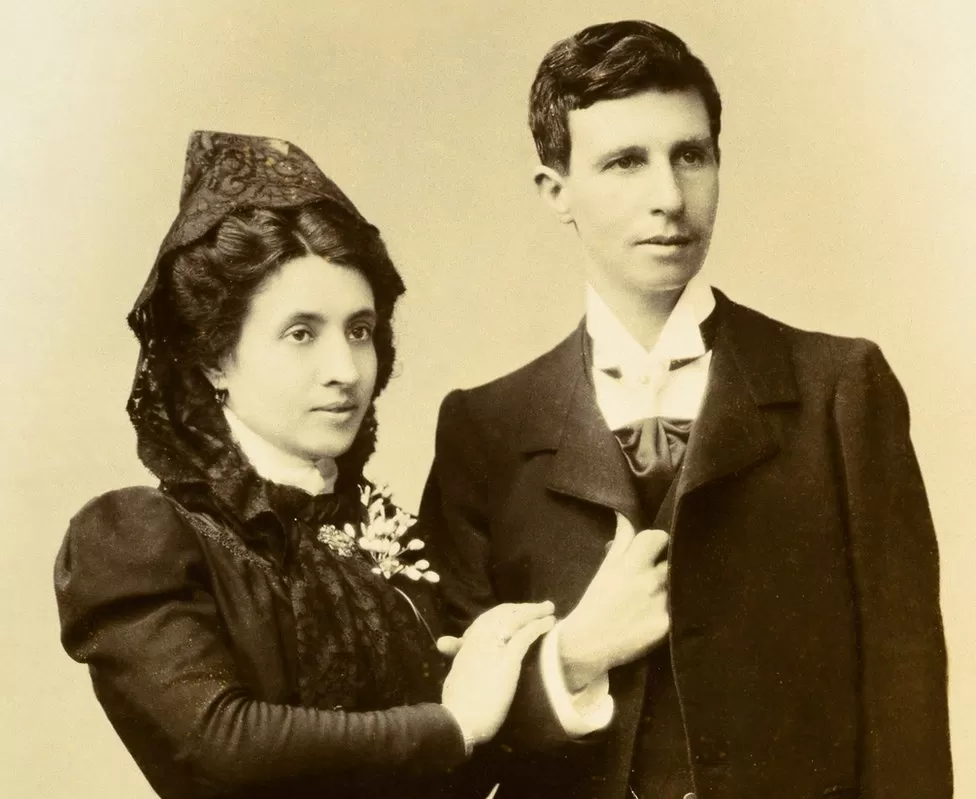
The first Catholic lesbian church wedding was held at the Church of Saint George (Iglesia de San Jorge) in A Coruna, Spain on June 8, 1901. Even though one of the women, Elisa Sanchez Loriga, was posing as “Mario Sanchez,” the marriage has never been invalidated by the Church or civil authorities.
Elisa Sanchez Loriga and Marcela Gracia Ibeas met while they were in school to train as teachers. They fell in love. While posted to village schools a few miles apart in rural Galicia, they concocted an elaborate wedding plot. Elisa assumed the identity of a cousin raised in London, and Marcela became pregnant.
A wedding portrait of the happy couple was published in the local newspaper, La Voz de Galicia. The headline read, “A wedding without a groom.” After the publicity the couple fled to Porto, Portugal, where Marcela gave birth to a daughter. Threatened with a Spanish extradition order, the couple settled in Buenos Aires, Argentina in 1902.
After arriving, Elisa, under the alias of “Maria,” married Christian Jensen, a wealthy Danish immigrant in 1903. He was considerably older. Marcela and their baby lived with them as Maria’s sister, “Carmen.” Jensen ended up denouncing Maria as a fraud since she refused to consummate the marriage. 
After that the trail of the two women goes cold. A Mexican newspaper reported in 1909 that Elisa had committed suicide in Veracruz.
See their love story, Elisa & Marcela, on Netflix!

While scrolling through Instagram on Gay Pride Day, I came across a photo of an attractive young woman holding a cardboard hand-lettered sign that read “I WAS a nonbinary CHILD.” She was smiling and obviously having a good time proclaiming her identity during the 2023 NYC Dyke March. What was odd, I thought, is that the photo was promoted on the Instagram account of Lesbian Herstory Archives, a respected and renowned organization known for preserving the stories and artifacts of women who identified as lesbian. Puzzled, I commented under the photo: Nonbinary = lesbian?
My question prompted a flurry of comments on lesbian identity and sexual attraction. I have abbreviated each person’s Instagram handle to protect their privacy –
CIN (ME) – Nonbinary = lesbian?
DJBZ @CIN– why is a Catholic account questioning a lesbian account?
CIN@DJBZ – I’m a lesbian. Out since 1980.
DJBZ@CIN– understood – just feeling sensitive to seeing religious accounts commenting on pride posts this year. And yes some lesbians are non-binary!
STT@DJBZ – sorry, but to be a lesbian is to choose. No nonbinary lesbians can exist by definition. A woman who is romantically and sexually attracted to another woman is a lesbian. If you aren’t a woman then no, nope, you cannot be a lesbian. And if the Lesbian Archives cant handle that it should call itself something else. Because lesbians who actually helped to create our herstory will not donate herstorical item’s because why? It wouldn’t make any sense
DJBZ – trans and non-binary lesbians exist and are very hot and cool. Get over it : )
MT@DJBZ – straight men aren’t lesbians and never will be. Non binary is just “not like the other girls”.
MT@DJBZ – lesbian = homosexual woman
STT@DJBZ: nope you are just confused, and have way too much time on your hands
DJBZ – your opinions are ahistorical. Don’t follow a herstory page if you don’t like or understand herstory!
DJBZ@MT– you are wrong. Hope that helps!
CBF@CIN – Yes. We have much work to do in 2023. Paraphrasing Karl Marx (a dude) The point isn’t a naval gazes and police gender expression and identity at a dyke march – the point celebrate Dykes in a rainbow of expressions self-definitions and political power.
CIN@CBF – With all respect, that is your opinion. We live in a free country and we are all free to do and say as we think. I am clear – my sexual and emotional attraction is to women born female and who identify as female. Period.
GBG – hi queer as hell woman here. Maybe you should stop telling other people what their definitions are or should be. We are not being erased. The definition is changing as we grow. Happy Pride! 
CBF – And that’s wonderful. We have lots of precedent to look at within the feminist tradition and within the lesbian tradition What happens when people start challenging others authentic relationship to being in our space. It is an approach that leads to division it is an approach that leads to bad politics. It is an approach that leads to alienation and a lack of constructive engagement. It is an inward cop-like attitude towards members of our community instead of linking arms with the broadest possible grouping in the LGBTQ spectrum and fighting against discrimination and injustice. Your approach and it’s legacy have been toxic for our community. And frankly it has no place in the modern LGBTQ community. Nothing but love for you but these politics and viewpoints are antithetical to building a movement that can successfully defeat the bigots who are organizing to harm us
STT@GBG – maybe you should pay attention. Why bother using any words at all? Words are precisely for ‘definition’ to help people navigate. When lazy people such as you decide nothing matters, then leave our defining term alone, it HAS meaning and you are being a mouthpiece for the patriarchy by saying anyone can be anything AND use a term that means something. Go get an education
DJBZ – dear terfs – misinformation is an illness. Get well soon!!!!
I checked the Lesbian Herstory Archives Instagram account about an hour later to find the moderator had erased the entire exchange, including my initial comment – Nonbinary = lesbian? Only one comment was kept: the scold by DJBZ: “dear terfs – misinformation is an illness. Get well soon!!!!”
So, I decided to reprint the exchange for posterity. DJBZ, CBF, CBG and others like them don’t have a modern sensibility—they are turning the clock back to the 1950s lesbian pulp fiction. Those paperbacks were usually written by men pretending to be lesbians. The same thing is happening today.
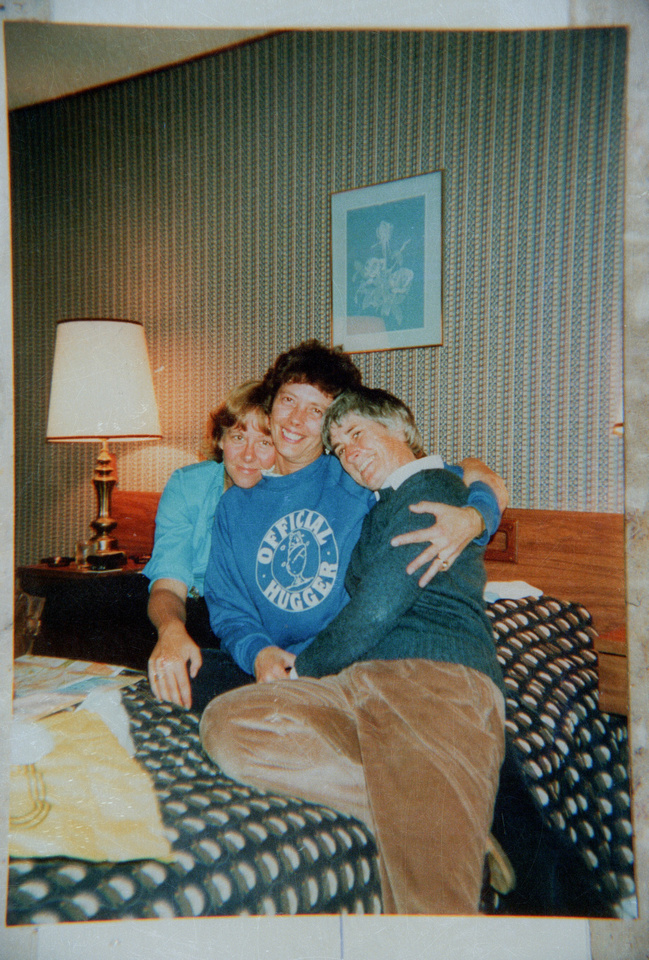
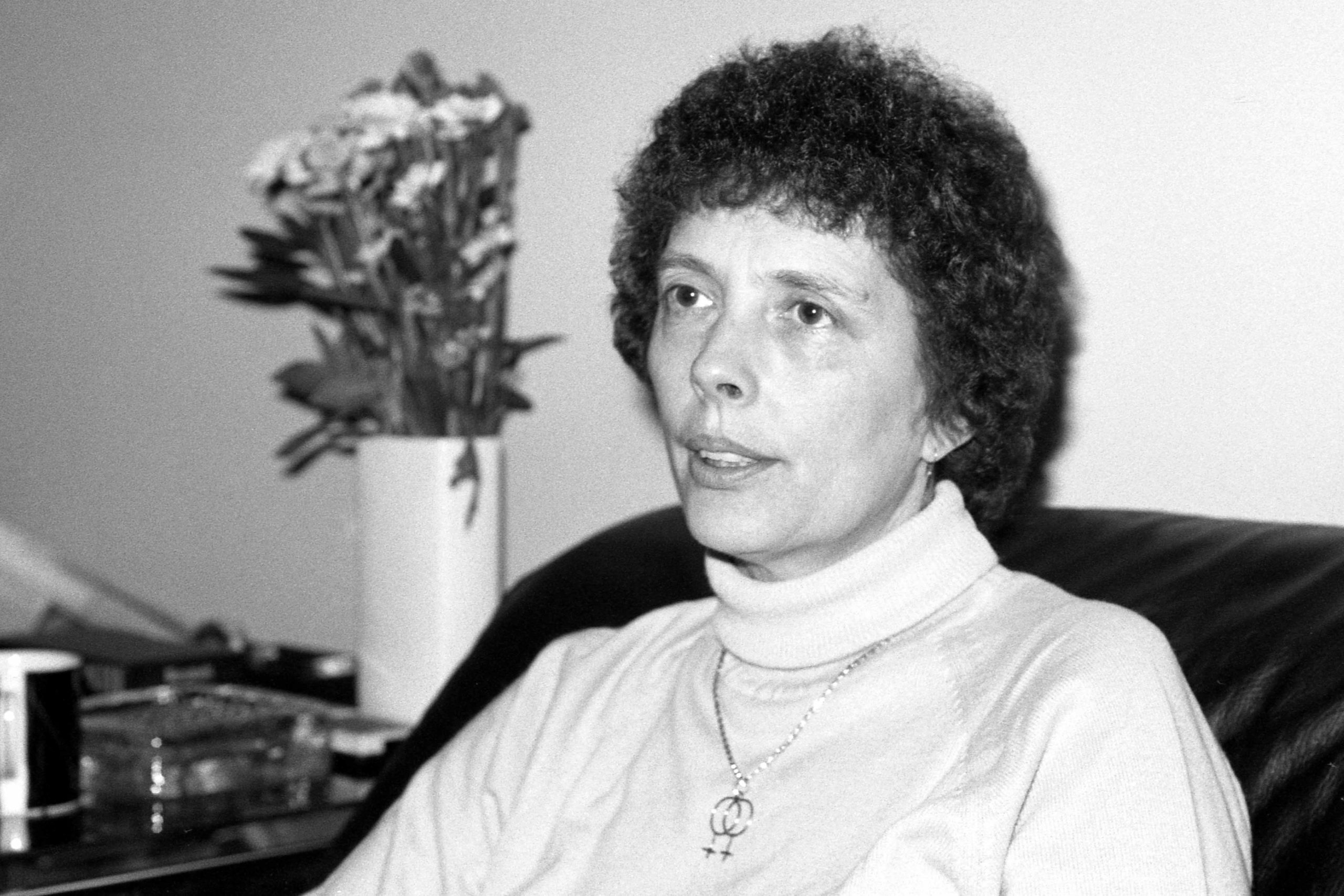
Karen Doherty, Pat Turner, Peg Cruikshank, San Francisco 1986
All the Gay Pride and social media coverage in June prompted me to reflect on my own activism and remember good friends. Back in the 1980s, when the Conference for Catholic Lesbians (CCL) was in full force growth mode, Pat Turner was the editor of our quarterly newsletter, Images. Pat stepped up to take on the role when we needed a person with experience and professionalism. Years before, Pat had served as an editor and production volunteer for the Daughters of Bilitis’ newsletter – The Ladder.
The Daughters of Bilitis
The Daughters of Bilitis, also known as “DOB” or “Daughters,” was the first lesbian civil and political rights organization in the United States. According to legend, Bilitis was the lover of Sappho, a renowned Greek lyric poet. DOB was founded as a social and activist group by four women in San Francisco in 1955. Some of the founders wanted to remain a social group, but others wanted to agitate for lesbian rights, respect, and equality. The activist group prevailed. (The opposite eventually happened with CCL – the social group prevailed.) Both groups died out due to lack of volunteers, and an inability to reconcile original founding goals with evolving cultural changes. Living a lesbian lifestyle became more accepted and affirmed as the US became increasingly secular and shifted away from its larger Judeo-Christian religious participation.
Tall with curly brown hair, Pat Turner is a very attractive woman. She was a steady presence and spoke in a reasoned and calm way. Pat had a very gracious way of speaking and disagreeing; so she could bridge disagreements and manage deadlines without ruffling feathers. When she was a young woman, she had joined a religious community, but left after a year or two. When I met her in the mid-1980s, Pat was an executive in the insurance industry and living in Florida. She had previously been in a long-term relationship, but her partner had passed away.
Lesbian Roles
Pat talked to me about her DOB days and what lesbian life was like at that time. Women usually identified themselves as “butch” or “femme.” Pat was femme. I told her I couldn’t identify with either group. She told me that I would have been kiki (the “i” pronounced like “eye.”) The term “kiki” was generally in existence from the 1940s-1970s and described a lesbian who did not identify as either butch or femme and was both passive and active sexually. Butches were active and femmes were passive. I didn’t like the butch/femme vibe, gender roles, or the idea of not having a complete sex life, so being a kiki outlaw was fine with me.
An Unexpected Gift
Pat gave me an unexpected gift. It was a handwritten letter on the last piece of stationery she had from her DOB days. The name at the top of the paper was Kim Stabinski. Many DOB leaders used assumed names to protect themselves from threats and harassment. I remember that I asked her how she chose that name, but I can’t remember her answer. I treasured that letter as a piece of lesbian history from a friend who helped to make that history. I included it with my CCL papers, photos and memorabilia that are now housed in the Marquette University archives.
Pat recorded her memories as part of the Daughters of Bilitis Video Project by the Lesbian Herstory Archives in New York City. Pat’s interview was taped on December 31, 1987. I listened to part of her interview as I was preparing this post. It was lovely to see her and hear her voice again. Pat was mentioned in the Lesbian Herstory Archives Newsletter, #10, February 1988, as part of the East Coast DOB. Her name was noted Pat Turner (Kim Stabinski).
I looked at the August/September 1969 issue of The Ladder, and there was Kim Stabinski on the masthead. Kim Stabinski authored an article in the December/January 1970-1971 edition, “The Roman Catholic Lesbian – The Old Order Changeth.” The article is eight pages long (page 15-22) and can be read in its entirety here.
Searching for Inner Peace
There are two sections in her article that were particularly moving. One involves Catholic Lesbians and their choices about attending Mass and receiving communion; the second described an encounter with her priest and her lover. They took place in the 1960s but could easily have happened today.
“So I sat in Mass Sunday after Sunday,” she begins, “watching – often with tears – others receive the sacraments denied me. I watched my Catholic Lesbian friends: the ones who had given up completely and never attended Mass, the ones who scraped in one furtive confession a year around Easter and avoided thinking of the shut door the rest of the time, and the ones who, like me, kept going but were strangers in their own Church. Then there were the few who were apparently good practicing Catholics, attending Church regularly and receiving the sacraments while continuing to live a Lesbian life. Notable in this group were two women who were very “married” and had been for a good many years.”
“In this latter group but distinctly different were a few who attended Mass and received communion regularly without confession – a real anathema in the Church’s eyes…They had managed to rationalize in their own hearts their defiance of the legalistic Church, but acceptance of the sacraments Christ intended them to have, even though these sacraments were coming through a Church that said they had no right to them. I envied them, too – I envied their courage to trust in God’s love alone, to defy the Church that said they were “eating their condemnation” by receiving communion “unworthily.”
Longing for Communion
In November of 1969, Pat Turner said that she made one last attempt to reconcile herself and her Catholic faith. She sought out a priest at her parish and set up a schedule for counseling. “At our first session I told Father my vastly-opposed-to-Catholic views on Lesbian expression in a real love relationship. I described the emotional relationship I share with my beloved (a Catholic, by the way, of the non-confession weekly communion clan), explaining that neither of us would degrade our love via confession – but that I wanted desperately to overcome my own mental block on the legalistic Church and be able to receive communion with her. I gave Father a copy of the June/July 1969 The Ladder with my article verbalizing my religious beliefs…” The priest took the newsletter and told Pat he wanted to discuss her and her situation with some other priests just out of the seminary and more versed on the newer trends in theology. Several weeks later, “after circulating The Ladder and soliciting the counsel of other priests, Father gave me the glad tidings – from that day on, my relationship with my beloved was not a matter for confession.” However, he did caution Pat that should she “fall into temptation and be unfaithful to my ‘better half,’ then that would be a matter for confession. That night, right there in Father’s study, sitting on the couch under full lights and looking him in the eye, rather than in a dimly lighted cubbyhole confessional box, I made my first confession in seven years. I confessed those things I believed to be sinful. I did not confess my love.”
Later that evening, when her lover came to pick up her, Pat motioned her to park the car and join her in Father’s study. Pat’s lover had been very anxious about her counseling sessions, fearing that they might either affect their relationship or Pat’s relationship with God.
“It was about 9:30 on the night of November 18 when the three of us together entered the deserted sanctuary, darkened except for myriad flickering votive lights and the outside lights playing through the stained-glass windows. My love and I knelt in silent, grateful prayer as Father made the necessary preparations, then approaching the altar where we received our Lord in Holy Communion – together for the first time.”
Being Whole and Authentic
“Later we walked down the aisle hand in hand, followed by a priest smiling the smile of one who knows he has helped – really helped – drawn a soul nearer to God…My love and I talked later of how this experience was almost like being married in the Church, so rich was its depth and feeling of togetherness with God and with each other.”
The “richness” Pat described is the richness of being whole, being authentically who you are – both Catholic and Lesbian and sharing that spiritual life and identity with another. It is as much a melding together as sex.
I cannot remember if Pat discussed this experience at any of our CCL meetings or get togethers, but I felt very grateful to her reading her article in The Ladder. Thank you, Kim Stabinksi, for the example of your faith and courage.
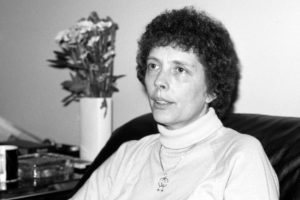
Pat Turner 1987
Pat Turner participated in the Lesbian Herstory Archives’ Daughters of Bilitis Video Project. She was taped December 31, 1987. You can listen to her interview here.
Kim Stabinski’s article, “The Roman Catholic Lesbian…The Old Order Changeth” can be read here.
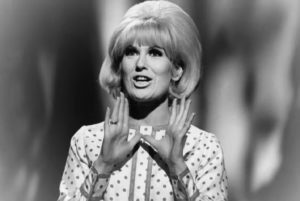
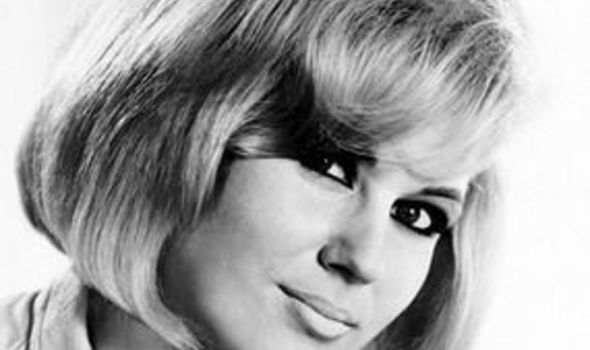
I had the Sirius station tuned to the 60s channel when Dusty Springfield’s song, “I Only Want to Be With You” came on. “I don’t know what it is that makes me love you so,” she sings. “I only know I never want to let you go. ‘Cause you started something, oh, can’t you see? That ever since we met you’ve had a hold on me. It happens to be true, I only want to be with you.” I remembered during the song that Dusty Springfield was supposed to be bisexual; “Son of a Preacher Man” was another one of her big hits. When I got home I decided to google Dusty Springfield and see what became of her. Not only was Dusty Springfield not bisexual—she was a lesbian—she was in the midst of a torrid affair with a woman in Memphis when she recorded “Son of a Preacher Man.” Dusty Springfield was one of the most successful female British singers of the 1960s, with a half dozen singles in the top 20. “You Don’t Have to Say You Love Me,” (1966) was her biggest hit in the U.S. and the U.K.
“There is a sadness there in my voice. I was born with it. Sort of melancholy. Comes with being Irish-Scottish. Melancholy and mad at the same time.” – Dusty Springfield
“My sexuality has never been a problem to me but I think it has been for other people.” – Dusty Springfield
EARLY DAYS
Dusty Springfield was born Mary Catherine Isabel Bernadette O’Brien in London, England on April 16, 1939. Her mother was Irish and her father was Scots-Irish. She was a tomboy growing up, and given the name “Dusty” playing football (soccer) with the boys. She attended an all-girls school, St. Anne’s Convent School in Enfield, London. The nuns predicted that the shy girl was going to become a librarian. As a teen, Dusty had short auburn hair and glasses. She credited the school with her first “blues” performance during a school assembly. After she left at 16, Mary O’Brien recreated herself as “Dusty Springfield,” a glamorous blond with make-up, teased hair and mod outfits.
In the early years of her career Dusty remained a practicing Catholic. The tour bus stopped so she could go to confession or attend Mass. But as the Sixties progressed, the practice of her faith diminished, and she began her long struggle with alcohol, self-harm, and violence in her relationships. She was eventually diagnosed as suffering from bipolar disorder in addition to alcoholism. 
Growing up, Dusty knew she was attracted to girls. Her first crush was on one of the nuns. She told Sue Cameron, one of her lovers, that she would watch a girl who lived across the street get undressed in front of the window. Her discovery of her lesbianism led to internal conflicts with her Irish Catholic upbringing, which she never resolved. Most Catholic lesbians and gays could not reconcile their sexuality and faith in the 1960s, and it is still a struggle today. To be one, we had to hide the other. This lack of authenticity and wholeness affected every part of Dusty’s life. Her inability to talk about that part of herself and her relationships produced terrible conflict and pain. For many years she managed it by drinking, drug use, and transient affairs and relationships, and the ever-present cloud of guilt and shame.
CAREER SUCCESS
Dusty had her first woman lover in 1963. In early 1964, her career took off with her first hit single, “I Only Want to Be With You.” Her desire for other women was forbidden in Britain at that time, so like most lesbian and gay artists, she performed for the straight majority but with emotions that were directed to her female partners and pursuits. During her peak, Dusty Springfield ranked among the most successful female performers on both sides of the Atlantic. Her blonde, bouffant hairstyle, heavy eye makeup, evening gowns, and stylized hand gestures, made her an icon of the Swinging Sixties.
She was in the limelight throughout the 1960s with such hits as “I Only Want to Be With You” (1964); “I Just Don’t Know What to Do With Myself” (1964), “You Don’t Have to Say You Love Me” (1965), “All I See is You” (1966), “The Look of Love” (1967), “Breakfast in Bed” (1969) and Son of a Preacher Man (1969). At the same time, Dusty was terrified that her lesbian love life would come to light and her career would be ruined. She also worried about its impact on family, friends and fans. Dusty Springfield hid her lesbianism for years, and used her Catholic upbringing as an excuse: “You have to concentrate on marriage and I’m a Catholic and can’t get divorced,” she said. Dusty was never reported to be in a relationship with a man. 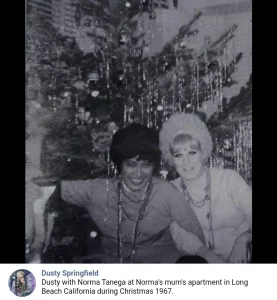
PARADE OF LOVERS
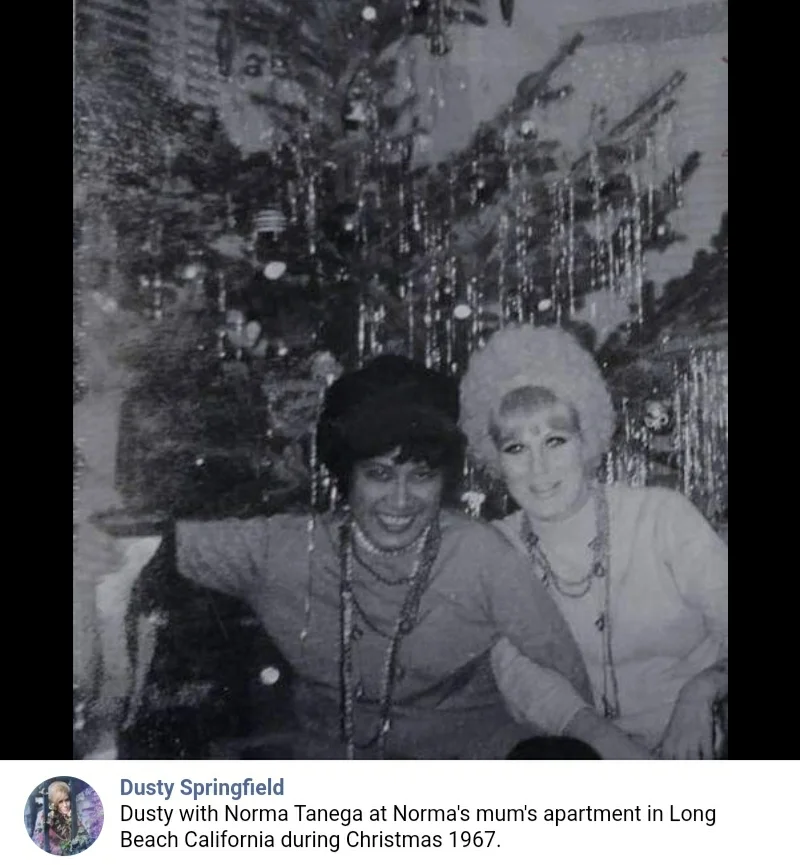
Dusty started churning through women beginning in the mid-sixties. In 1966 Springfield met American singer Norma Tanega, a Mexican-American singer, painter and activist. The couple fought just as hard as they loved. “I can’t tell you how many times I got that phone call at three in the morning,” said one of Dusty’s friends. “Get over here, Cat’s trying to kill me!” (Cat was Norma’s pet name for Dusty). Or, “John, come quick, Norma’s trying to kill me!” Dusty was prone to having flings behind Norma’s back. “I don’t mean that I leap into bed with someone special every night, but my affections are easily swayed and I can be very unfaithful. It’s fun while it’s happening, but it’s not fun afterwards because I’m filled with self-recriminations. The truth is I’m just very easily flattered by people’s attentions, and after a couple of vodkas I’m even more flattered.” She added, “I suppose to say I’m promiscuous is a bit of bravado on my part. I think it’s more thought than action. I’ve been that way ever since I discovered the meaning of the word. I used to go to confession and tell all my impure thoughts.”
Norma Tanega left Dusty in the early 70s when she found their relationship too difficult to sustain. According to Tanega, Dusty “wanted to be straight and she wanted to be a good Catholic, and she wanted to be black.” Springfield owned that while she was brought up Catholic, she no longer went to Mass. “It’s about six years since I made my Easter Duties. My mother’s going to love this. I still think that because I don’t go to Confession I’m going to go to hell but I haven’t done anything evil. I’m just lazy and self-indulgent.”
After Norma, Dusty began a string of on and off relationships, short affairs and one-night stands. From 1972-1978, she saw Faye Harris, an American photojournalist. In the 70s she was linked to the tennis pro Rosie Casals, although Casey’s said they were close friends, not lovers. There was a woman in Australia that shoved Dusty into a hotel fountain during a fight. In 1968, while recording her masterpiece album, “Dusty in Memphis,” she had a torrid affair with a woman named Sandy, drinking and partying so hard that she lost her voice. During the same trip, Dusty got into a fight with Sandy or another woman, which ended up with a TV in the hotel’s swimming pool at 4 am. One of them had picked up the TV and thrown it at the other. It went out the window and down 14 floors into the pool. One woman called the police on Dusty saying she had drugs. “As it happens I know who tipped them off,” she said. “There was a rather hysterical lady who was upset because I didn’t fancy her.”
In 1970 she gave an extremely brave interview to Ray Connolly in London’s Evening Standard, talking about her rumored attraction to women. “There’s one thing that’s always annoyed me, and I’m going to get into something nasty here. But I’ve got to say it because so many people say it to my face. A lot of people say I’m bent, and I’ve heard it so many times that I’ve almost learned to accept it. I don’t go leaping around to all the gay clubs but I can be very flattered. Girls run after me a lot and it doesn’t upset me. It upsets me when people insinuate things that aren’t true. I couldn’t stand to be thought of as a big butch lady. But I know I am perfectly capable of being swayed by a girl as by a boy. More and more people feel that way and I don’t see why I shouldn’t.”
THE OBSCURE YEARS
Dusty Springfield’s honesty came at a price— her popularity waned and she didn’t have a hit single for another 15 years. By the early 70s her stardom was over, and during the next decade and a half she faded into obscurity in LA as her fortune and career ebbed away. In 1972, Dusty had decided to flee the English press and move to California. The move left her short of money and without the support network she had in London. Her alcohol and drug use increased, and she found herself caught in an alcoholic haze that’s still too familiar to lesbians and gays torn between the closet and the need to live honestly. “When I knew Dusty, unfortunately, she was a mess,” said a lesbian business owner in LA who had a brief affair with her. “She was a very fragile, brilliant, special person—the sweetest, nicest person you could ever know. But she was also the most insecure person who ever lived. She was drinking, using, and slitting her wrists. She was so vulnerable.”
In the mid-seventies Dusty plucked up the courage to tell her parents that she was a lesbian—only to have it dismissed as unimportant or a joke. She was devastated by their reaction not to take her seriously. By then, her drug use was out of control, her love life reduced to a string of short-lived affairs, the sales from her recordings were low, and her royalties reduced to a trickle. She was often between stays in rehabs and hospitals. But she had yet to reach her lowest point.
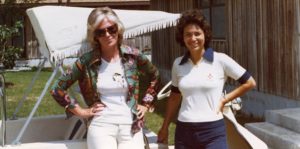
Dusty and Sue Cameron
DEMONS, DRUGS AND ALCOHOLISM
In 1974, Springfield’s mother passed away. This brought her to a deep mental low. Her lover, Sue Cameron, said that Springfield would sit on the floor and hallucinate about demons. “She would scream a lot,” Cameron said. “She’s say, “Demons! Demons! They’re coming to get me! – over and over again. “She’d also threaten to harm herself. She said when she cut herself she knew she was alive, because she could feel it.” A succession of psychiatrists confirmed that Dusty was struggling not only with alcoholism but also mental illness; depression and bipolar disorder. She also attempted suicide multiple times. Cameron ended her relationship with Springfield when Dusty chased her with a knife. “I will never know whether she intended to hurt me or not,” Cameron said. “She was laughing at my terror as she came toward me, teasing me by thrusting the knife closer and closer as I backed up. In my heart I think she was playing a sick game that was almost out of her control. I ran out of there to save myself.”
In 1981, Dusty met Carole Pope of Rough Trade, a Toronto-based rock band known for their provocative lyrics. Their 1981 hit, “High School Confidential,” was one of the first explicitly lesbian-themed Top 40 hits in the world.
“She’s a cool blonde scheming bitch, She makes my body twitch. Walking down the corridor. What’s her perfume? Tigress by Faberge. She makes me cream my jeans when she comes my way.”
In 2000, Random House published Pope’s autobiography, Anti Diva. The book detailed Pope’s relationship with Springfield, how they met and first had sex. “My manager, Vicki Wickham, thought that Dusty and I should meet. I heard stories Vicki told about Dusty, and she sounded like a handful, but Vicki believed that you could have any woman you wanted if you put your mind to it. Her mantra, “Every Bird is pullable,” had become part of my philosophy. So, in the fall of 1980 I flew to New York to meet the Queen of the Mods and see her perform at a supper club called the Grand Finale. Vickie came with me. The place was packed with Dusty fanatics and celebs; the audience included Rock Hudson and Helen Reddy, the singer of “I am Woman.”
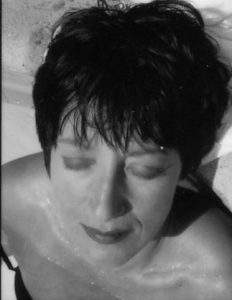
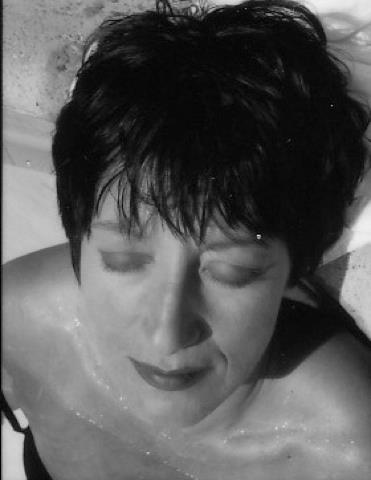
Carol Pope
“My first words were, “Vicki suggested we meet.” Dusty looked at my shyly and smiled. We started to talk and joke around, and within minutes were flirting madly with each other. In the middle of our dance of seduction, Helen Reddy came backstage with her husband. Dusty and I turned to each other and said, after they left, “Why is she married? She seems like a big dyke.”
Some months later, Dusty invited Carol to see her at the Montreal Ritz-Carlton. “I tentatively knocked on the door of Dusty’s suite. She answered, then stepped back into a rococo décor accented with heavy black and gold wallpaper. She seemed shy and unsure, and she was not alone. Her assistant—a girl draped in peals who epitomized the meaning of the word preppy—was introduced as Westchester. She discreetly left the room. Yes, the air was thick with sexual tension. She offered me a drink, and the next thing I knew we were all over each other. We tumbled into bed, half-naked. It was the first time I’d been with an older woman. Dusty had several years on me, and I found the idea very erotic. I fixated on her sensual mouth and unfathomable eyes. The most erotic thing we ever did in bed was this: I would beg Dusty to sing to me. She would put her mouth up to my ear. Then the sound of her voice, so intimate and so close, would wash over me in waves of pure pleasure.
Carol Pope asked Dusty to sing background vocals on a song, “The Sacred and the Profane,” she wrote for Rough Trade’s 1981 album, “For Those Who Think Young.” “Under the influence of Dusty—my twisted Catholic girl—my brain was inundated with images of Fellini films and Catholic morality.”
The hairdresser teaser her coif
With his tail comb
She has the tortured look of a Magnani
Constantly hounded by the paparazzi
The blood of Rome runs through her veins
She’s frightened by her overactive hormones
Mondo Italiano La Dolce Vita
Lust is written all over her face
She loves the smell of danger…
The fury of fallen angels
The aspirations of saints
The sacred and the profane
The relationship between the two started to erode the first time Carol had to take Dusty to the emergency room. “Dusty had taken some pills, coke, and God knows what else.” Carol took the knife out of Dusty’s hands when she started to cut her arms. “I tried to ignore the faded scars on her arms…What kind of self-loathing drove her to it?…Dusty was mainly silent about her past and the origin of her demons.”
“We broke up in LA. I told her I was being torn apart by her behavior. She was lost and I cared deeply about her, but she was fucking up my life. Dusty was very sweet, and resigned to the outcome. A few months before she died, Dusty called Carol to apologize. “She said, “I’m sorry for the way I behaved when we were together. You know I loved you.”
Dusty started to attend Alcoholics Anonymous meetings to help her deal with her drinking. She met actress Teda Bracci at an AA meeting in 1982 and they moved in together in April 1983. Bracci recalled that during a trip to Rome Dusty kissed her on a balcony overlooking the Vatican in defiance of her faith. 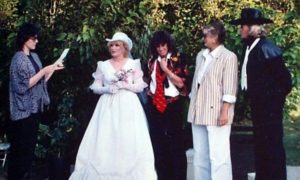
The two women wed at the end of 1983, exchanging vows in a backyard ceremony in LA’s San Fernando Valley. A lanky and vivacious brunette, Bracci appeared in some action films: a biker chick in CC & Company with Joe Namath and Ann Margaret; a prison inmate in a few episodes of Falcon Crest, a popular TV soap opera; a female lead in the LA premiere of Hair; and headlined in famous Sunset Strip rock clubs like The Troubadour and the Whiskey-A-Go-Go. The “best lady” at the wedding ceremony said Dusty wore a formal wedding gown, and the other bride wore a pants outfit with a vest and tie. Dusty was trying to stay sober, so anyone who wanted a drink would need to retrieve a bottle of Jack Daniels that hung from a rope outside the bathroom window. “Everyone seemed happy and peaceful that day,” the best lady said.
But like her other relationships, her marriage to Bracci quickly deteriorated into drunken violence. In one incident, Dusty menaced Bracci with a broken cup and slashed her leg. Bracci responded by hitting Dusty repeatedly in the head with a boot.
The last straw came on a day when Dusty was drinking wine and taking Valium. Teda returned to their apartment and the inevitable fight ensued. Bracci hit Springfield in the mouth with a saucepan and her teeth were knocked out. A plastic surgeon was able to patch her up, but damage to her face was permanent. The couple separated, and by 1987 Dusty headed back to Britain and a revival of her musical career.
BREAST CANCER
Dusty recorded several songs with the Pet Shop Boys, including the hits, “What Have I Done to Deserve This,” (1987) and “Nothing Has Been Proved,” (1988). In 1994, during work on her last album, “A Very Fine Love,” Dusty discovered she had breast cancer. Although her initial treatment was successful, the cancer returned and she died on March 2, 1999, in Henley-on-Thames, Oxfordshire, one month short of her 60th birthday. She had a Catholic funeral Mass in St. Mary the Virgin Church. Her casket was brought to the church by a horse-drawn carriage as she requested, and “You Don’t Have to Say You Love Me” was playing as her casket was carried into the church. Hundreds of fans and people from the music business attended her funeral, including ex-lover, Carol Pope.
In her last interview with the New York Times, Dusty said she would be very happy if her life took her back to Ireland. Her brother Tom, honored her wish and scattered a portion of her ashes near her favorite spot, the Cliffs of Moher. The rest of her ashes are buried under a granite marker in St. Mary the Virgin churchyard in Henley.
In the months before her death, Dusty reflected on her life with two of her friends. Lee Everett-Akin was the widow of gay DJ Kenny Everett. Like Dusty, he was raised Catholic, and that formation stayed with him throughout his life. “Being “outed” was one of her greatest fears. She just felt that she would be rejected by everyone if her secret came out. “We had a great affinity around her sexuality because Kenny felt exactly the same way. He was terrified of people finding out. They were very similar people, in that they were both brought up strict Catholics and that brought with it an awful lot of guilt.” Lee added that one of Dusty’s biggest regrets toward the end of her life was that she never settled down with someone. “She had so much love to give, even though she knew she was impossible to live with. She would say, “My life would’ve been so different if I’d had a good relationship.” Lee Everett-Akin had tried to persuade Dusty to write her life story, but Dusty told her she couldn’t remember most of it because of drugs and drinking. “The saddest thing of all,” Everett-Akin said, “was that when she was dying she told me she was embarrassed by her life, by the drinking, the failed relationships. She felt she had made so many mistakes in her life.”
Lee Everett-Akin’s comments echoed those of another close Dusty friend, Simon Bell, who moved in with her for the last 14 months of her life. “There were certain things she was addicted to, like the drink and the drugs and indeed relationships, that she eventually learned she just couldn’t have, said Bell. “She was never totally comfortable with the fact that she was a lesbian. She was very open privately with me but I think her Catholic background stayed with her right to the end and she never completely came to terms with it.”
MY LANGAN LOVE
The anger and the sadness of being a gay or lesbian Catholic always remains. Allies in local parishes, sympathetic clergy, and the large poll numbers of Catholics who believe their LGBT brethren should be treated fairly and respectfully encourage our belief that we truly belong; but the words we heard growing up and as young adults—that we were sick, our desires were twisted, that God, Jesus and the Church were against us—still resonate in our memories and emotions.
Despite all the negativity and doubt, there are times when we feel at home—with a place, in a song, with ourselves. In a YouTube video search of Dusty singing, I chanced on a clip of her performing “My Lagan Love” during a 1967 TV show. It is an old Irish ballad. “People get the idea,” she starts, “that all Irish songs are either “Paddy McGinty’s Goat” or “When Irish Eyes are Smiling,” all those lovely sorts of Hollywood Irish songs. Actually, the most beautiful ones I’ve ever heard are played by a very old gentleman somewhere in Donegal…The song that impressed me most of all was the one I’m going to attempt to sing for you now, called My Lagan Love.” A harper accompanied Dusty, who played an acoustic guitar. 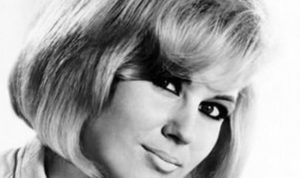
My Lagan Love
Where Lagan streams sing lullabies
There blows a lily fair.
The twilight gleam is in her eye,
The night is on her hair.
And like a lovesick Lennan-shee
She hath my heart in thrall.
No life have I, no liberty,
For Love is Lord of all.
And often when the beetles horn
Has lulled the eve to sleep
I’ll steal into her shelling lorn
And through the doorway creep.
There on the cricket’s singing stone,
She makes the boxwood fire
And sings in sweet and undertone
The song of hearts desire.
Her welcome, like her love for me,
Is from her heart within.
Her warm kiss is felicity
That knows no taint of sin.
And when I stir my foot to go,
‘It’s leaving Love and light,
To feel the wind of longing blow
From out the dark of night.
Dusty’s performance was shy and humble, which made her rendition of the song even more piercingly beautiful. The verses of anticipation, desire, love and longing were authentic; not the covert references to love in her Top 40 hits. Dusty was fully at home and in peace in the love song, and it was beautiful to hear, see and experience.
On March 1, 1967, New Orleans businessman Clay Shaw, 54, was arrested at his home on 1313 Dauphine Street on charges that he conspired to assassinate President John F. Kennedy. New Orleans District Attorney Jim Garrison said Shaw conspired with Lee Harvey Oswald, David Ferrie and Guy Bannister to kill Kennedy. Lee Harvey Oswald, a former U.S. Marine, shot Kennedy on November 22, 1963, from a sixth-floor window of the Texas School Depository as Kennedy traveled by motorcade through Dallas. Shot through the head, he died almost instantly. Garrison claimed that Shaw was the man named as “Clay Bertrand” in the Warren Commission Report. Garrison said that Shaw used the alias Clay Bertrand in New Orleans’ gay circles. 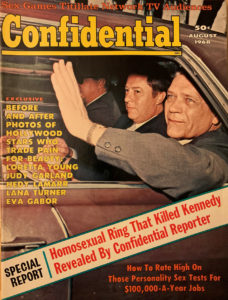
Conspirators
Guy Bannister was a private investigator in New Orleans. He was a former FBI agent and an avid anti-communist, with ties to various anti-Castro groups. David Ferrie, a former seminarian, was an airline pilot and an anti-communist activist. At the time of the assassination Guy Bannister was helping Ferrie in his dispute with Eastern Airlines and the New Orleans Police Department regarding charges of extortion and “crimes against nature”—picking up teenage boys for sex.
Homosexual Thrill Killing
Like many Americans, New Orleans District Attorney Garrison did not believe that Lee Harvey Oswald acted alone but was part of a conspiracy to kill Kennedy. Since Garrison needed a theory that allowed him the authority to prosecute, he produced the idea that the assassination was a “homosexual thrill killing.” Since gay men were culturally perceived as criminal sexual deviants, they were vulnerable to blackmail and intimidation. On July 15, 1967, NBC gave Garrison a full half hour to explain his hypothesis about the assassination. “Tonight, I’m going to talk to you about truth and about fairy tales,” he began. Garrison told journalist James Phelan of the Saturday Evening Post that David Ferrie and Clay Shaw “had the same motive as Loeb and Leopold, when they murdered Bobbie Franks in Chicago back in the twenties,” a reference to the sensational 1924 kidnapping and murder of a fourteen-year-old boy by two lovers.
Fabricating a Theory
Garrison’s spider web of conspirators were connected by gossamer threads. Shaw and Ferrie were both homosexuals. Ferrie and Garrison were anti-Communists associated with Cuban refugees in anti-Castro groups. Lee Harvey Oswald joined a civil air patrol squadron in 1955. Oswald met Ferrie when he was a guest instructor. Under hypnosis, Perry Raymond Russo, an insurance agent, claimed that he saw Shaw, Oswald and Ferrie at a party discussing assassinating President Kennedy. The conversation also included plans for “triangulation of crossfire” and alibis for the participants. 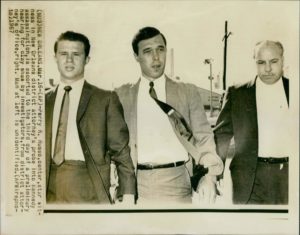
Russo recalled seeing Shaw on Nashville Avenue Wharf when he went to see JFK speak (May 4, 1962). “He said he particularly remembers this guy because he was apparently a queer. It seems that instead of looking at JFK speak, Shaw kept turning around and looking at all the young boys in the crowd. He said that Shaw eventually struck up a conversation with a young kid not too far from him. It was perfectly obvious to him that Shaw had stared at his penis several times…He said that Shaw had on dark pants that day that fit very tightly and were the kind of pants that lots of queers in the French Quarter wear.” During the trial a prosecutor asked Shaw and various witnesses if Shaw had ever worn “tight pants.” Shaw said that he didn’t have any tight pants.
Like Shaw and Ferrie, Russo was a homosexual. Russo was Garrison’s star witness at Shaw’s trial. In 1971, he admitted to members of Shaw’s defense team his story was completely made up, and he persisted with it since he was afraid of Garrison and would not “sacrifice himself” for Shaw.
Clay LaVergne Shaw was big man, six foot four and a barrel-chested 225 pounds. Quiet and soft-spoken, he moved in New Orleans’ elite social circles. Shaw was the former head of New Orleans’ International Trade Mart. He was an amateur playwright (Tennessee Williams was a friend). Shaw was also an advocate of restoring the city’s famed French Quarter, where he owned a home. His close friends knew that he was gay, but it was a carefully guarded secret so it would not affect his standing in the community.
Continuing Harassment
The jury took less than an hour of deliberation to return with a verdict of not guilty. The date was March 1, 1969, exactly two years after his arrest. A few days after his acquittal, Garrison charged Shaw with perjury. Shaw spent the remaining years of his life and his entire savings trying to clear his name. The strain of the five-year ordeal took its toll on Shaw’s health. He died of lung cancer on August 14, 1974. He was 61 years old.
Garrison’s group of conspirators eventually morphed beyond Lee Harvey Oswald (who was insinuated to be gay or bisexual) and a few gay men in New Orleans. His theory went on to include the FBI, CIA and the whole “Military-Industrial Complex” of plotting Kennedy’s death in cahoots with anti-communist and anti-Castro extremists. Despite the bizarre circus of Shaw’s trial, Garrison managed to keep Kennedy assassination conspiracy theories in public consciousness.
Although Clay Shaw was discreet about his homosexuality, Garrison knew about it and found it useful to portray Shaw as a criminal and a conspirator. Shaw’s “double life” fed into that narrative. How Shaw managed his gay circle and sexual life during the trial is sad, showing a blameless and dignified man turning on himself at his core. During the trial and aftermath, he must have endured an excruciating amount of ridicule and prurient interest. Shaw wanted to protect his friends, so he told them to stop contacting him directly. He also sought counseling with a Catholic priest and began reading extensively about spirituality, including Father Adrian Van Kamm’s Religion and Personality. Another book was Thomas Merton’s, Conjectures of a Guilty Bystander, which Shaw mistitled, Confessions of a Guilty Bystander in his journal and an interview.
Homophobia
Author Alecia P. Long, in her 2021 book, Cruising for Conspirators – How a New Orleans DA Prosecuted the Kennedy Assassination as a Sex Crime, includes a short vignette on pages 120-121 on Shaw’s struggle with his sexual desires. “On April 17 Shaw documented in his journal a daylong struggle with sexual temptation. ‘I have resolved, since all this happened, to change my life completely and to let die certain aspects of my personality which should have been disposed of many years ago.’ The sexual attraction he felt awakened “memories, reflections, and desires” that he found “vivid, intense and disturbing.” “At day’s end, he wrote, ‘The best defense seemed to be silent repetition of the Lord’s prayer off and on during the day, with particular emphasis on that passage asking that we be led not into temptation but delivered from evil…Empirically, it worked. By afternoon all temptation had disappeared. I have no hope it will be that easy in the future, but at least I have found the path.”
Homophobia – never mentioned – played a huge role in Garrison’s conspiracy theory, the trial, and Shaw’s individual reckoning. Shaw fought to clear his name as an assassination conspirator until the end of his life, but in the process of doing so seems to have come to believe that his homosexuality was responsible for his predicament. He committed to celibacy to make amends. What an ugly and mournful end for a man who lived as fully, productively and authentically as society would allow until he was falsely accused of killing Kennedy.
I don’t think that Goya was gay, but he had an emotionally charged relationship with a close friend, a never-married businessman named Martin Zapater. They discussed masturbation and sent each other drawings of their penises in their letters. Martin Zapater y Claveria (1747-1803) was a wealthy Aragonese merchant and Enlightenment thinker. 
A new book, Goya y Las Mujeres, by Spanish art historian Natacha Sesena suggests that the painter had a homosexual relationship with Zapater. Letters written by Goya to Zapater at the height of Goya’s creative years have romantic and sexual undertones.
Goya, the artist who first painted a woman’s pubic hair (“La Maja Desnuda) in 1797-1800, had 20+ children, a wife and mistresses, and must have had some heterosexual leanings—but kept his emotional and intellectual intimacy for a friend from his youth, Martin Zapater. Goya was very private and reserved in his opinions, but spilled out his heart in his letters to his friend:
“My Martin, I am desperate to go with you because I like you so much, and we suit each other so well, and it’s impossible to find anyone comparable, and I imagine what my life would be like if we could be together and hunt and drink chocolate and spend the 23 reales I have in your company…it would be the greatest happiness in the world.” Some of Goya’s letters are signed “Yours and yours again, your Paco Goya” and “He who loves you more than you think.”
During an illness in 1790, Goya told Zapater that “with your portrait before me, it seems I enjoy the sweetness of being with you oh my soulmate I didn’t believe friendship could arrive to the stage I am now feeling.” 
Most passionate friendships, for women at least, are never consummated, and always remain in the realm of “sexual almostness.” Sexual almostness stimulates a heightened awareness of possibility, but also the boundaries that surround us. It could push an artist into daring realms—like painting pubic hair.

I search for lesbians in history. There is very little historical record or literature on lesbians before the late 19th century. Imagine my delight in discovering Ria Brodell’s book, Butch Heroes. I am grateful that Brodell found and brought these women to life. I can’t identify with their assumption of a male role; although I certainly can appreciate their brave and adventurous lives.
What is interesting about these individuals is that all of them dressed and assumed a male “role,” i.e., a “butch.” Their lovers or wives assumed a female “role” in the partnership. Did the people in Butch Heroes feel that they needed to identify as a man because they wanted to have sex with other women? Did identifying as a male give them freedom to avoid the female role of keeping house and staying at home? Or both?
What Ria Brodell did with their book is to make an emphatic statement that lesbians, and gender nonconforming people, have always existed, found lovers, lived their lives with varying degrees of success, and some led exceptional lives. Much like today. Society’s degree of toleration has expanded in the last one hundred years, particularly in the past 20 years, but no lesbian or gender nonconforming person lives totally “out” without experiencing some form of violence. Just like the past.
Brodell uses a uniquely Catholic format to portray Butch Heroes. When they/them was growing up their aunt had a huge collection of holy cards, and they would look at them together. She would talk to Brodell about the various saints whose stories were depicted on the cards. “So when I started researching people for Butch Heroes, I immediately thought of holy cards. The way cards employ symbolism, their intimacy, colors, style, etc. was perfect. They elevate a person to reverence. They are used for remembrance. I want this for the Butch Heroes.” 
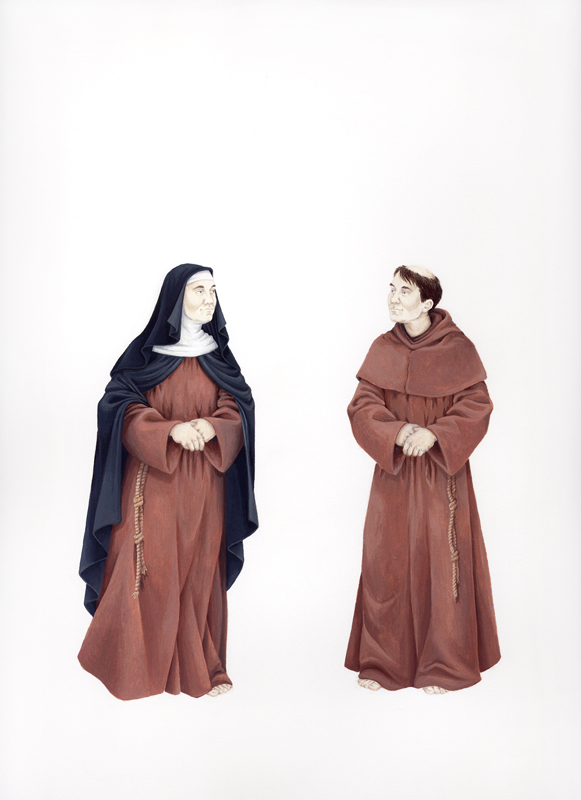
Ria Brodell started the Butch Heroes project in 2010 after creating the painting, Self Portrait as a Nun or Monk, circa 1250. “I was thinking about what my life would have been like had I been born into a different century. Joining the church, becoming a nun or monk, was one option for those who did not want to enter into a heterosexual marriage or conform to strict gender roles of their time. As a former Catholic, I knew that “homosexuals” were called to a lifetime of chastity or service to the church, but I supposed that queer people of the past must have found other ways to live, and I wanted to find out how they did so.” 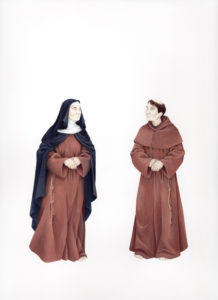
Prior to researching and painting Butch Heroes, Brodell blended sexuality, gender, role models, and Catholic childhood in The Handsome & the Holy, a series of self-portraits and vignettes she created from 2008-2010. “The Handsome & the Holy was the first time I tried to tackle the subject of my gender identity, sexuality and Catholic upbringing through painting,” Brodell said. “As a kid, part of me knew that something was “queer” about who I was attracted to, and who I wanted to be (Cary Grant, Ken, the Prince in all the Disney movies), but I didn’t have the language or the knowledge to understand what that meant. The way I wanted to express my gender did not mesh well with having to wear a little plaid skirt to school.”
Since I owned a Ken doll growing up I know exactly what she meant.
“When I began this series, I remembered a drawing I made for my First Reconciliation book in second grade. I had drawn a picture of St. Michael I was very proud of, and I showed it to my grandma. She told me it looked more like He-Man…Looking back now, He-Man and St. Michael had a similar appeal for me, strong warriors, fighting for good. As far as what unites movie stars, saints and toys like G.I. Joe and He-Man, for me they all represented an ideal, whether it was physical aesthetics or moral values. In combining them all for “The Handsome & the Holy” I was hoping to unite my “queer side” with my religious background because they are equally present in my life.”
One figure I’m surprised Ria Brodell left out was Saint Joan of Arc—who was burned at the stake for dressing like a man and hearing divine voices. I don’t know if she was a lesbian but dressing in armor certainly was outside the gender norms of 13th century French peasant girls.
Another candidate for a future Ria Brodell series would be St. Hildegund of Schonau (d. 1188). St. Hildegund was the daughter of a German knight. When she was twelve, she accompanied her father on a pilgrimage to the Holy Land. For her protection, she was disguised as a boy called Joseph. On the way home her father died. Hildegund/Joseph contained to maintain her identify as a boy then man. Back in Germany, Joseph was admitted to the Cistercian monastery in Schonau, where he remained until his death. 
Buy Butch Heroes here.

Cardinal Krol (left) Pope John Paul II celebrating Mass
Cardinal John Krol, archbishop of Philadelphia (1961-1988), tried to dissuade Kirkridge, a Christian retreat house in Bangor, Pennsylvania, from hosting the first Conference for Catholic Lesbians in November 1982. Nothing public, just behind-the-scenes pressure. The caller first asked, then threatened. The Cardinal’s office didn’t have any leverage, since Kirkridge Retreat Center is an interfaith Christian community, not a Roman Catholic institution or organization. The Kirkridge staff had backbone, the request came to naught. Cardinal Krol did not want any public Catholic lesbian gathering in the neighboring diocese (Allentown) which was part of his ecclesiastical province. It would be a scandal.
I know this, because I received a call from my contact at Kirkridge to let me know that this had happened, and to reassure me we that we could still host our event there.
Who tipped Cardinal Krol’s office off, I don’t know, because at that time, we had barely begun to circulate notice of the conference. They must have seen an invitation letter to a speaker, picked up gossip from Dignity, or heard a rumor via a gay clerical network.
Cardinal Krol was described by New York Times writer Peter Steinfels as “an outspoken defender of traditional theology, hierarchical authority and strict church discipline.” He was also one of the first Catholic prelates to align with Republic Party figures. A photo taken in 1981 shows him with President Ronald Reagan. 
Krol was used to working behind the scenes to stop scandals. In 2003, the report from a Philadelphia Grand Jury strafed Cardinal Krol and his successor, Cardinal Anthony Bevilacqua, charging that they protected predator priests and concealed sexual abuse of boys and girls. On page 30 of the report it notes: “For most of Cardinal Krol’s tenure, concealment mainly entailed persuading victims’ parents not to report the priests’ crimes to police, and transferring priests to other parishes if parents demanded it or if “general scandal” seemed imminent.”
The Conference for Catholic Lesbians (CCL) had a second conference at Kirkridge in 1984. There was no warning call from the Philadelphia Chancery this time. My feeling is that Cardinal Krol had bigger fish to fry that year including preparing the opening invocation at the August 1984 Republican National Convention. In his remarks, Krol agreed with comments that President Reagan had made earlier in the day that religion and politics are inseparable. “Our Republic was conceived and survived only on moral and religious foundations,” Krol said. “The most important right of all,” Kroll emphasized, “is the right of life, which must be protected by the government.”
Protecting the unborn was a high priority for Cardinal Krol. Protecting the institutional Church from scandal was also very important to him–more important than the life and faith of abused children and their families. How else could he justify reassigning priests who sexually violated children and teens to a new parish to continue the cycle of abuse?
“Life for me ain’t been no crystal stair.” – From Mother to Son by Langston Hughes
Mabel Hampton was a dancer during the Harlem Renaissance, a domestic worker, and an early lesbian activist. In her later years, she worked with the Lesbian Herstory Archives to preserve LGBT black history. Hampton appeared in the films, “Silent Pioneers” and “Before Stonewall.” The Lesbian Herstory Archives has an extensive collection of taped reminiscences of her life, photos, personal papers, and her 1950s lesbian paperbacks.
In 1984 Hampton addressed the crowds at the New York City Pride Parade: “I, Mabel Hampton, have been a lesbian all my life, for 82 years, and I am proud of myself and my people. I would like all my people to be free in this country and all over the world, my gay people and my black people.” In 1985 she was named Grand Marshal of the Pride Parade. I marched in both of those parades. Gay Pride Parades in the 1980s had a festive spirit – marchers felt safe and empowered in the presence of thousands of other lesbians and gays. The marchers were also serious – we wanted the same civil rights as other Americans. Before the New York City Council passed the “gay civil rights” bill on March 20, 1986, we had no legal protection from discrimination in housing, employment, and public accommodations.
Most marchers were white, and spectators who lined the streets uptown were also white—friends and tourists. Downtown, much closer to the Village, spectators were primarily gay, and many of them were black, Hispanic with a handful of Asians. They didn’t march because to be spotted in the parade would have “outed” them, and if that happened their family would mostly likely have disowned them. They did not want to risk giving up their families.
Catholic marchers also enjoyed a special protest unit of our own co-religionists. Members of the Blue Army of Mary and other ultra conservative Catholics would throw holy water and shake rosaries as we walked by. Many of these scolds were women. I’m not sure what they intended to accomplish by throwing holy water on the marchers—an exorcism or miracle. The splash of water was refreshing on a hot, humid June day even though it was thrown in hate and disgust. But we also knew that it was their substitute for spit.
Reflecting on Mabel Hampton now, almost 40 years later and when I am much closer to her age at that time, I can only marvel, appreciate and respect what she had to endure to persevere as a proud black woman who was lesbian and a Catholic. 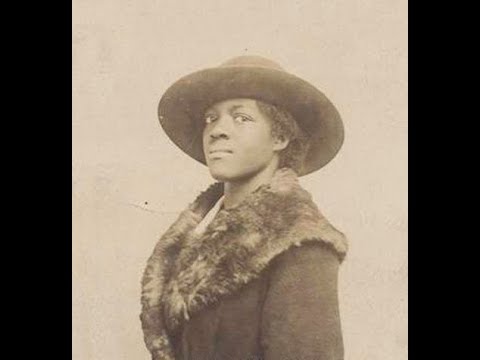
A poem my father, Eugene Doherty, liked to use in his creative writing classes was “Mother to Son” by Langston Hughes. It was written in 1922. The subject of the poem was a strong woman who had experienced poverty and setbacks but continued to strive and move forward. She encourages her son to do the same. I’m sure Dad had his own mother in mind; but I immediately thought of Mabel Hampton.
Life for me ain’t been no crystal stair.
It’s had tacks in it,
And splinters,
And boards torn up,
And places with no carpet on the floor—
Bare.
But all the time
I’se been a-climbin’ on,
And reachin’ landin’s,
And turnin’ corners,
And sometimes goin’ in the dark
Where there ain’t been no light.
So boy, don’t you turn back.
Don’t you set down on the steps
’Cause you finds it’s kinder hard.
Don’t you fall now—
For I’se still goin,’ honey,
I’se still climbin,’
And life for me ain’t been no crystal stair.
Mabel Hampton was born on May 2, 1902 in Winston-Salem, North Carolina. Her mother died when she was a baby. She went to live with her grandmother, but after she died, Mabel was sent to live with an aunt and uncle in New York. She was seven. They treated her harshly and she was raped by the uncle. After that, Mabel decided to run away. “I went out with nothing but a dress, a jumper dress, and I walked and walked.” She was found at a playground by Bessie White, who took her into her home. Hampton lived in the White household until Bessie died. At 17 she was on her own. Arrested for prostitution, she served a two-year sentence at the Bedford Hills, NY reformatory. Hampton said she was falsely accused because she attended women’s parties.
After she was released from jail, she began life as a dancer and singer with an all-black women’s troupe on Coney Island in Brooklyn, NY. She met an older woman who introduced her to the word, “lesbian.” The two had one night together before the woman had to return to her husband in Philadelphia. “She taught me some things,” Hampton said. “I knew some of them, but she taught me the rest.”
From Coney Island, Mabel moved to bigger and more glamorous stages in Harlem. The 1920s were the time of the Harlem Renaissance, and Mabel met and partied with many black lesbian and gay notables, including Jackie “Moms” Mabley, Ethel Waters, Gladys Bentley, Ethel Williams and socialite A’Lelia Walker. “I had so many girlfriends it wasn’t funny,” Hampton recalled. 
While waiting for a bus, Hampton met a woman she described as “dressed like a duchess.” Her name was Lillian Foster, and the two met on September 22, 1932. Foster recalled the meeting decades later: “Forty-four years ago I met Mabel. We was a wonderful pair. I’ll never forget it…We haven’t been separated since in our whole life. Death will separate us. Other than that I don’t want it to end.” They referred to themselves as Mabel and Lillian Hampton and made their home at 639 E. 169th Street in the Morrisania neighborhood in the Bronx. Depending on the circumstance, they sometimes called themselves “sisters.”
After Hampton left dancing, she began cleaning homes for wealthy white families. It was during this time that she met Joan Nestle, the daughter of one of these families, who co-founded the Lesbian Herstory Archives in New York City in 1974. She volunteered for the organization, and her stories of the wild parties of the Harlem Renaissance were enjoyed by the other volunteers. Her memories and experiences contributed to the knowledge of the lives of black lesbians in the early 20th century.
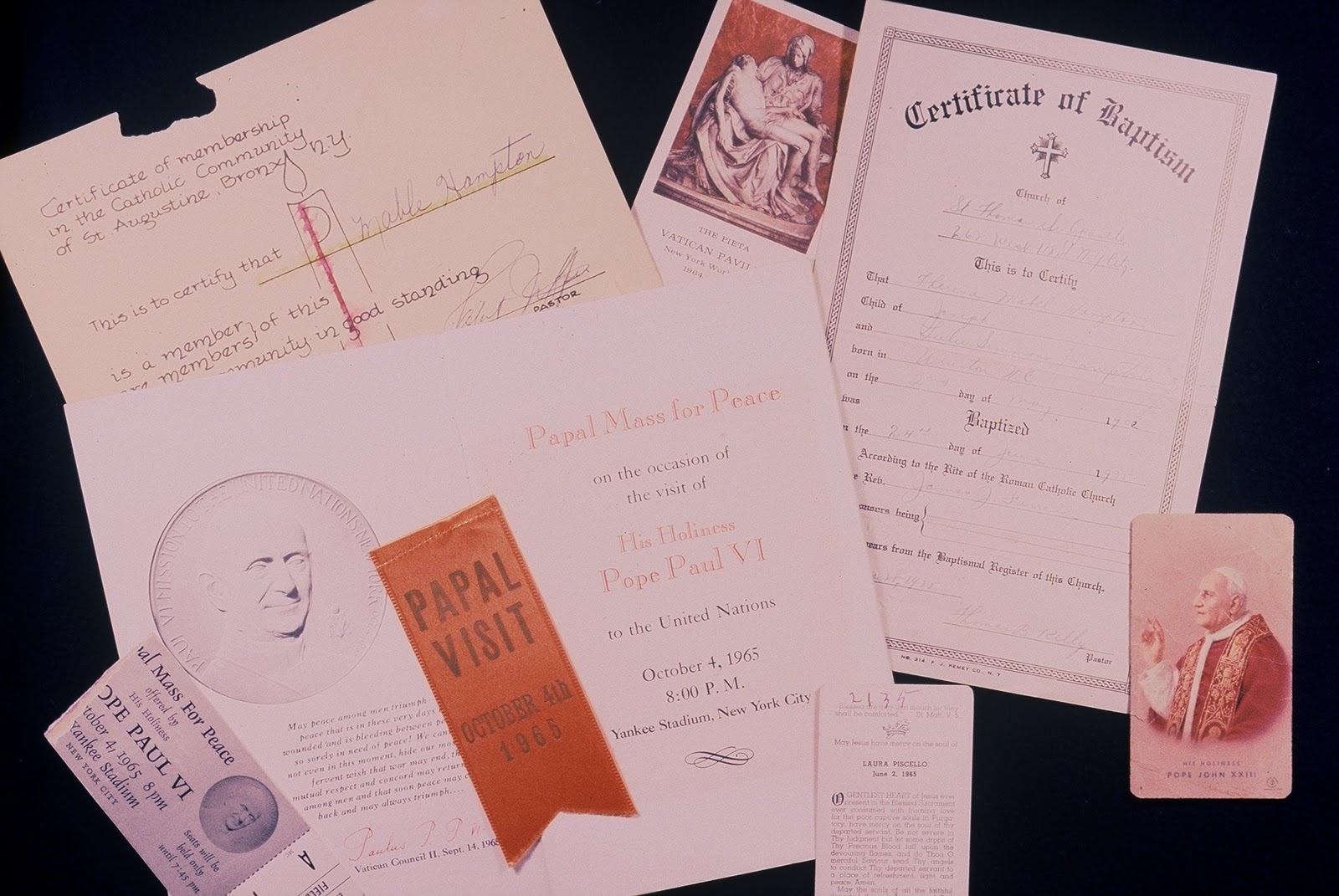
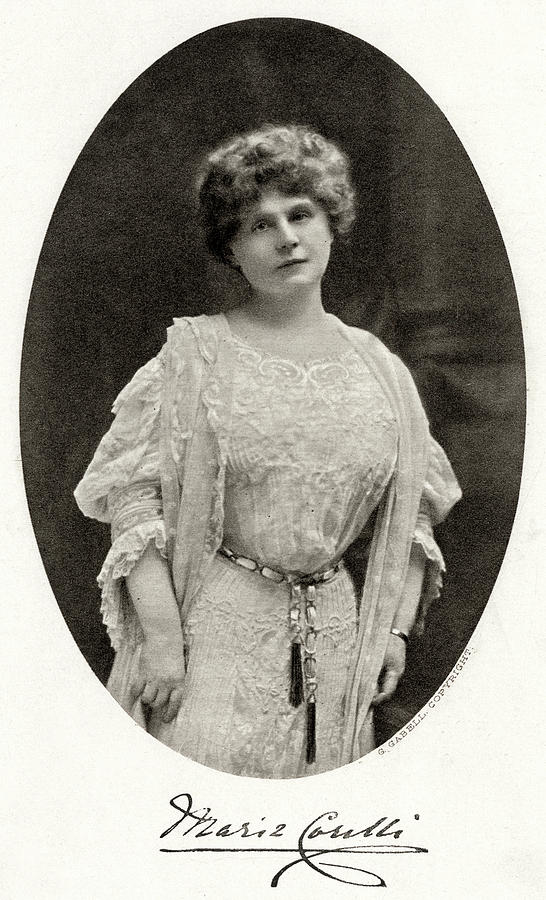
In 1935, when she was 33 years old, Mabel Hampton was received into the Roman Catholic Church. She was baptized at St. Thomas the Apostle Church on West 118th Street in Manhattan, a church with a sizable congregation of black Catholics. The Lesbian Herstory Archives website stated, “It was a step in her ongoing quest for spiritual comfort, and included a lifelong devotion to the mysteries of the Rosicrucian, and a full collection of the writings of Marie Corelli, a Victorian novelist with a spiritual bent.”
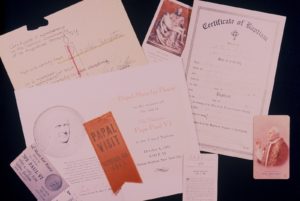
There is no information at all on why Hampton decided to become a Catholic, what it meant to her, or how she reconciled her committed relationship with Lillian Foster with her faith. Obviously, she did, like thousands of other Catholic lesbians. A photograph of a collage of Hampton’s Catholic memorabilia includes prayer cards of friends or people she knew from the 1960s, her baptismal certificate, and membership in St. Augustine Catholic Church in the Bronx. She attended Pope Paul VI’s Mass in Yankee Stadium on October 4, 1965. Even if she was not a practicing Catholic at the end of her life, those papers were important to her as part of her life’s story.
I have thought a lot about who or what might have led Mabel Hampton to seek out baptism. Maybe she met a Catholic woman or a couple at one of the rent or dance parties she attended. Maybe she was curious and walked into a church and met a black sister who listened and answered some of her questions. Hampton’s life provides some clues. She strove for justice. She persevered. She was humble. She loved deeply. She shared. These qualities can be founded in anyone but are strengthened and reinforced in a person by faith. She also had the example of Bessie White, who rescued a child from the street and abuse and fed, clothed and cared for her.
The fact that Mabel Hampton was interested in Rosicrucian mysteries and the writings of Marie Corelli provides a few clues to her spirituality and spiritual interests.
A modern Rosicrucian group – The Ancient Mystical Order Roase Crucis (AMORC) was founded in New York City in 1915 by H. Spencer Lewis (1883–1939). Claiming that he had learned the teachings of the order from European Rosicrucians, Lewis attracted new members by distributing his teachings in mail-order lessons and pamphlets. Rosicrucians are concerned with the occult, astrology, and esoteric secrets.
Hampton’s collection of Marie Corelli’s books provides another hint of Hampton’s interest in mysticism and the supernatural. Marie Corelli, born Mary Mackay (1855-1924) was a popular novelist and Queen Victoria’s favorite author. A reoccurring theme in Corelli’s books is her attempt to reconcile Christianity with reincarnation, astral projection, spirit or time travel, and the occult. She was associated with a Rosicrucian organization. 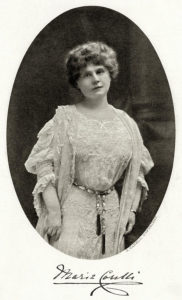
For over 40 years, Corelli lived with her companion, Bertha Vyver, and left everything to her when she died. She never identified herself as a lesbian, but frequent erotic depictions of female beauty appear in her novels.
Mabel Hampton died of pneumonia on October 26, 1989. She was 87 years old. She is buried in St. Raymond’s Cemetery in the Bronx, New York. Her life partner and wife, Lillian Foster, is also buried in St. Raymond’s.
I am very grateful to Joan Nestle, Deborah Edel and other volunteers from the Lesbian Herstory Archives for preserving and honoring the generous life of Mabel Hampton. She is an inspiration to the lesbians who follow in her footsteps. 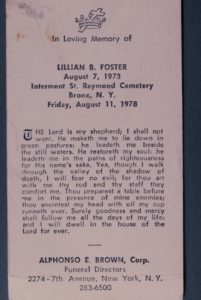

The Doodler
THE KILLER
The Doodler, also known as the Black Doodler, was a gay serial killer active in the San Francisco area during 1974-1975. He killed at least six men and attempted to kill at least three others. The toll may be much higher. The man suspected of being the Doodler is still alive and living in San Francisco. The SFPD identified him as a person of interest, but don’t have enough evidence to charge him with a crime. Three survivors of his attack refused to identify him or talk to police. It was easier for them to almost die and risk others getting stabbed to death than ruin their lives and careers by coming out.
The Doodler got his nickname by his habit of sketching his victims prior to having sex and killing them. Based on one victim’s description, the Doodler was a black man, 19-25 years old, very lanky and around six feet tall. He often wore “a Navy-time watch cap.” He may have been an art student – he told one of the survivors he was “studying commercial art.”
The Doodler’s approach was to go to a gay nightclub or bar, sketch his chosen victim and use his sketch as a pick-up line. He would suggest they go somewhere private or isolated for sex. He would stab the man to death sometime during the sexual encounter. The Doodler left his sketches at the crime scene, although the police never released any of the sketches to the public.
No one knows exactly why the Doodler started killing in January 1974 or why he stopped in June 1975. The police believed that he had “mental difficulties involving sex,” or “sexual identification problems.” According to the San Francisco Chronicle, the Doodler told each victim: “All you guys are alike,” by which he meant gay. Detectives believe that the Doodler was a self-hating gay man, who killed during or after sex as a way of dealing with his own homosexual desires.
THE VICTIMS
The victims were white gay men, 27-66, that the Doodler picked up in bars and clubs for a sexual encounter. Each victim was stabbed or beaten to death. Most of the violence went well beyond what was needed to kill each man.

Gerald Cavanaugh
VICTIM #1 – Gerald Cavanaugh, 49.
Gerald Cavanaugh’s body was discovered at 1:57 am on January 27, 1974. He was lying at the edge of the water at Ocean Beach. He had been stabbed 16 times. A cut on his left hand indicated a defensive wound. Cavanaugh wore underwear, shoes, socks, pants, a shirt, a jacket, and a Timex watch. He had $21.12 in his pocket. He worked in a mattress factory. He was 5’ 8” and weighed 220 pounds. Cavanaugh was Catholic. “Never married,” noted the coroner.
Cavanaugh was born in Montreal, Quebec, Canada on March 2, 1923. He left home young and did a 21-month hitch with the US Army in World War II. He ended up in the Haight-Asbury section of San Francisco in the 1970s, to take advantage of the sexual freedom there and in the nearby Castro. He was not out to his family. He went home once a year to visit his mother until she died in 1967. After that, he never went back.
Police records show that Cavanaugh had been stopped by police, suspected of having sex in men’s restrooms near the foot of Ulloa Street at Ocean Beach. His body was found in the sand a short distance away. The anonymous call that tipped police to Cavanaugh’s body came from a pay phone at those restrooms.
His sister came from Canada to identify his body, but no one took Gerald Cavanaugh home after his murder. He lies under a weathered gravestone in the Holy Cross Cemetery in Colma, California, about 12 miles south of San Francisco.

Jae Stevens
VICTIM #2 – Joseph “Jae” Stevens, 27
Early in the morning of June 25, 1974, Jae’s body was discovered by a woman walking her dog. He was in the bushes by Spreckels Lake in Golden Gate Park, close to his car. He had been stabbed three times and there was blood in his nose and mouth. Joseph Stevens had been born in Texas but moved to San Francisco in his late teens. Stevens performed as “Jae,” a female impersonator at Finocchio’s, a nightclub in San Francisco. He was originally brought in as a replacement act but proved to be so popular that he quickly moved into gay stand-up comedy. One of his sisters described him as “Very, very talented. And again, gorgeous. Oh, my, we had such fun together, making up little shows while he was growing up and then later in clubs. I mean, he was a fantastic actor. And, oh, could he sing.”
Three months after his death, another sister, Alma Teresa Stevens, thought evil spirits had emerged from his murder. She killed their mother and burned her in the family fireplace. She attacked another sister and tried to kill her. The sister survived, but Alma ended up in an institution for the criminally insane. The people who purchased the family home said the mother haunts the house, but she is a friendly ghost. They talk to her and ask her to watch the house while they are away.

Klaus Christmann
VICTIM #3 – Klaus A. Christmann, 31
Klaus or Claus Christmann, a German national, was last seen alive at Bojangles, a gay dance club in the Tenderloin district. He had been visiting friends in San Francisco for three months. His wife and two children remained in Germany. According to the coroner, “The deceased’s pants were unzipped and open,” supporting investigators’ theory that Christmann and the Doodler had gone to a quiet, private area for sex.
A dog walker discovered his body early in the morning on Sunday, July 7, 1974. He lay near a street leading from Golden Gate Park to Ocean Beach. His throat was slashed in three places, and he had been stabbed 15 times. At his death, Christmann wore a tan leather jacket, “black side zipper ankle boots with brown Cuban-heels, a white Italian shirt, orange bikini briefs, one blue moonstone ring and one brown cameo ring along with a gold wedding band.” The coroner also noted he had a tube of face paint in his pocket, which led police to speculate that Christmann may have been working as a drag queen or female impersonator in secret.

Frederick Capin
VICTIM #4 – Frederick Elmer Capin, 32
Frederick Capin was from Washington State, a decorated Vietnam veteran working in San Francisco as a registered nurse. He had been a medical corpsman in the Navy and was the recipient of a medal for saving four men under fire in Vietnam. His body was found on May 12, 1975, by a hiker behind a sand dune between Vicente and Ulloa Streets in the Outer Sunset neighborhood of San Francisco.
Capin, six-feet-tall and a lithe 148 pounds, had been stabbed 16 times in upper left chest. Capin’s corduroy jacket and multi-colored “Picasso” shirt were blood-soaked, and there was dried blood smeared over his face, hands, and blue jeans. The marks in the sand leading to Capin indicated his body had been dragged about 20 feet.
VICTIM #5 – Harald Gullberg, 66

Harld Gullberg
Harald Gullberg was a sailor. He was born in Sweden in 1908 and became a naturalized American citizen on August 15, 1955. Half his teeth were gone and those remaining were rotted. Gullberg was a heavy drinker and was slowly dying from cirrhosis.
His body was found near Land’s End Trail by Lincoln Park Golf Course on June 4, 1975. Gullberg’s throat had been slashed. He had been dead about two weeks. Gullberg’s pants were unzipped, and he wore no boxers or briefs. He had $2.43 in his pocket. His face was eaten by maggots.
VICTIM #6 – Warren Andrews, 52
In January 2022, the San Francisco Police Department identified a sixth victim of the Doodler. Warren Andrews was a lawyer for the U.S. Postal Service. He lived in Millbrae, a suburb of San Francisco. Andrews was battered with a rock and branch and left for dead on the morning of April 27, 1975. His body was found in Land’s End park. His family flew him home to the Seattle area, where he lay in a coma until dying nearly two months later. A reporter tracked down Andrews’ sister. When asked if he was gay, she said, “I think he probably was…but back in those days, everybody was in the closet.”

Warren Andrews
THE SURVIVORS
Three men survived an attack by the Doodler. They saw his face, talked to him, may have even had sex with him. They were able to flee or get away before he killed them. The eyewitnesses described their attacker as a young, tall, slim black man.
SURVIVOR #1 – May 1975
A European diplomat met the Doodler in a restaurant “where he was having a midnight snack.” The Doodler asked the diplomat if he had any cocaine. They went back to the diplomat’s apartment, where the Doodler stabbed him six times. The diplomat denied they had “sexual relations.”
SURVIVOR #2 – July 1975
A “nationally known” entertainer took the Doodler back to his Fox Plaza apartment. The identity of this person has never been disclosed, although he might have been actor Rock Hudson or Richard Chamberlain, or singer Johnnie Ray. The identity of this survivor is one of the great mysteries of the case.
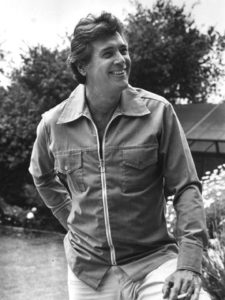
Rock Hudson
SURVIVOR #3 – July 1975
The third survivor was a “well-known San Francisco figure” who left the city after the attack and refused to answer calls or letters and wouldn’t help the police in their investigation. The man had brought the Doodler back to his Fox Plaza apartment, which happened to be on the same floor as the first attack two weeks prior. The late Charles Lee Morris, owner and publisher of the Sentinel, a San Francisco gay weekly, told a story about a Los Angeles man who was about to go to bed with a young black man resembling the composite sketch of the Doodler, but changed his mind when a knife fell out of the man’s pocket.
THE SUSPECT
In January 1976, the San Francisco Chronicle ran a story about the Doodler and two days later a suspect was arrested. A man who resembled the composite sketch was taken into custody after he entered a Tenderloin bar and offered to draw the patrons. Along with a book of sketches, he’d been carrying a butcher knife. When he was brought in for questioning he denied assaulting or killing anyone; but became so enraged during an interrogation that he attacked one of the detectives.
The man was let go, and never charged, because none of the three survivors would testify against the man in court. It would mean coming out of the closet and being revealed as gay. Without their cooperation, police couldn’t build a case. Gay rights activist and politician, Harvey Milk, said, “I can understand their position. I respect the pressure society has put on them.”
In 1977, the San Francisco Sentinel reported that a local psychiatrist practicing in the East Bay area informed police that one of his patients confessed to being the Doodler. The psychiatrist said his patient was struggling with his own homosexuality and was killing in response to his own conflicted feelings. The psychiatrist has the surname “Priest,” or may have been a priest. His identity was lost.
San Francisco Police confirmed in 2019 that the man suspected of being the Doodler was alive and still considered a person of interest in the case. In the 47 years since the Doodler’s last murder, many of the officers involved in the case have died, although one of the survivors may still be living. Susan Stryker, the author of Gay by the Bay: A History of Queer Culture in the San Francisco Bay Area mentions the case briefly. “The only people I found who remembered the killings were trans women who lived in the Tenderloin at the time,” she said. “It is a very poorly-remembered episode in SF LGBT history.”
Were there other serial murders of gay men in the late 70s and 80s in other cities in California or gay urban centers? In the case of the younger men, Klaus Christmann in particular, my theory is the Doodler savaged men with whom he was strongly sexually attracted. The older men, Gerald Cavanaugh and Warren Andrews, may have been of the age or physical resemblance of a man or men who sexually abused or took advantage of him when he was younger. The choice of a knife as a killing weapon is strongly evocative of an erect penis. It enters a body and takes control. He stabbed at the heart.
San Francisco Chronicle reporter, Kevin Fagan, resurrected this notorious serial killer case through his podcast, The Doodler, produced in partnership with Ugly Duckling Films and Neon Hum Media. Maybe the murderer will confess? Maybe the police have enough DNA to prepare a case? Sadly, I don’t think either one will happen and the Doodler will die a free man. Who is he? A friendly neighbor? A respected elder? A recluse in a shabby apartment with a dog-eared sketchbook?